Showing posts with label attorney. Show all posts

Thursday, March 14, 2019

Weapons Law 101: The "Innocent Use" Defense

The "Innocent Use" defense is a legal argument that may apply in cases where someone is accused of possessing an illegal weapon.  To successfully raise the defense, the defendant must convincingly argue that the "weapon" found in his possession is not actually a weapon -- it's a tool used for some "innocent use".

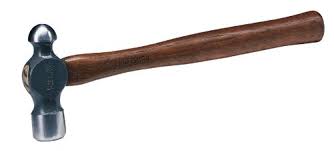
Of course, many common items could be used as weapons, but that doesn't necessarily make them illegal to own or possess.  The prime example is a ball peen hammer.  A ball peen hammer could be used to crack the skull of a rival biker, or it could be used to shape metal.  If a biker is found with a ball peen hammer and he's charged with some weapons-related offense, he might successfully argue that the hammer isn't a weapon, it's a tool.  Hammers have innocent uses (like repairing motorcycles).  Bikers figured out this loophole years ago.  Today, the ball peen hammer is a symbol that is commonly used to identify "outlaw" motorcycle clubs.

Weapon?

The same logic applies to baseball bats.  Obviously, a baseball bat can be used as a brutal weapon.  It can also be used to hit baseballs -- an "innocent use".  If a baseball player is found with a bat and he is charged with the crime of possessing an illegal club, he should be able to defend himself by arguing that, in this context, his bat is not a "weapon".

The "innocent use" argument is a little more complicated than a lot of people realize, though.  In order to raise the defense at trial, the judge must first find that the object in question has some innocent use.  Think of the ball peen hammer and the baseball bat -- both of these items are commonly used for innocent purposes.  If the judge agrees that the item may possibly be used for some lawful activity, then the defendant may argue that his hammer is just a tool, or his bat is just a piece of sporting equipment.

But that's not the end of the story.  Just because your object has some innocent use doesn't mean that it's 100% legal to possess it at all times.  If the defendant raises the "innocent use" argument, then the prosecutor must prove beyond a reasonable doubt that the defendant intended to use the object as a weapon.  They may build their case with circumstantial evidence by considering the totality of the circumstances -- when, where and how was the defendant found carrying the item?  If the baseball player was arrested while leaving a baseball game and wearing a baseball uniform, then the context of the situation looks pretty innocent.  If a baseball player is driving around on a Saturday night with a bat behind the seat of his car, it looks less innocent.  If the jury believes that the baseball player intended to use his bat as a weapon, he can still be convicted.

Now, this is the nuance I wanted to explain regarding the "innocent use" defense:  if the item is clearly a weapon (brass knuckles, a cane sword, a baseball bat with a nail through it, etc.), the judge will not allow a defendant to argue "innocent use".  In that case, the prosecutor does NOT need to prove that the defendant actually intended to use the item as a weapon.  Intent is irrelevant.  When the item is clearly a weapon, then the DA only needs to prove that the defendant knew that it was capable of use as a weapon.

There is a common misconception that gets a lot of people into trouble here.  Many people falsely believe that they have a defense to weapons charges if they simply call some illegal weapon a "paperweight" or a "sculpture".  A quick search on Amazon will turn up page after page of brass knuckles mislabeled as "novelty items", "costume jewelry" or "for entertainment purposes only".  In California, those are not valid defenses.  If an object obviously looks like a set of brass knuckles, the judge will not allow the defendant to argue that they were actually something "innocent".  And remember, the DA doesn't even need to prove that the defendant intended to use his brass knuckles as weapons, only that the defendant knew that the item was capable of use as a weapon.

There are many possible defenses to weapons charges.  If you or a loved one has questions about possessing weapons in California, call us for a free attorney consultation.  (714) 449-3335.  Ask for John.

Thanks for reading.

Fullerton Weapons Lawyer

Thursday, August 16, 2018

Can I Be Arrested for Being "Drunk in Public" on Private Property?

Section 647(f) of the California Penal Code makes it a misdemeanor to appear in a "public place" while under the influence of alcohol or drugs.

In "drunk in public" cases, the question often arises over what technically constitutes a "public place".  There is a common myth that "drunk in public" laws are unenforceable inside bars because bars are private property.  This is false.

Under California law, a "public place" is defined as any place that is generally open and accessible to anyone who wishes to go there.  This includes private businesses that invite members of the public onto their premises.  Bars are considered to be "public places" in California.

Since roads, highways, and even parking spaces are open and accessible to the public, California courts have ruled that they also qualify as "public places" for the purposes of PC 647(f).  This means that you can be arrested for being drunk in public if you are found intoxicated inside a vehicle while the car is in a public place (on the road or parked somewhere publicly).

In some states, you can be arrested for being intoxicated in a place that is visible to the public.  In California, though, it is not necessarily illegal to be under the influence of alcohol while exposed to public view.  It is perfectly legal for adults to get inebriated inside their own homes in California, regardless of whether or not they are visible to neighbors.

The front lawn of a private residence, however, is a different story.  In the landmark case of People v. Olson (1971) 18 Cal.App.3. 594, a California appellate court ruled that the area between the street and the front door of a private residence (including the lawn and porch) are considered to be "public places" for the purposes of PC 647(f).  Since it would not be considered "trespassing" for a stranger (e.g. a salesman, a Girl Scout, a mail carrier, etc.) to approach the front door of a private home, that area is considered to be "open and accessible", and therefore "public".  This means you can be arrested for being "drunk in public" on your own front lawn.  The same is true for common hallways and courtyards of apartment buildings -- if those areas are generally open to members of the public who may pass through while conducting lawful business, then they are considered to be "public places".

In my view, there are still some unanswered questions here.  What if, for example, your front lawn is enclosed with a white picket fence?  Is that still considered "open and accessible"?  What if you have a "No Trespassing / No Solicitors" sign posted?  How about a super exclusive, members-only bar?  Or a Masonic Lodge?  Are these places "open to the public"?  I could see arguments going both ways.

There are many possible defenses to PC 647(f) charges in California.  The best strategy in your particular case will depend on the unique facts and circumstances.  Our office has extensive experience in fighting "drunk in public" charges throughout Southern California.

If you or a loved one has questions about a "drunk in public" case in California, call us for a free attorney consultation.  (714) 449-3335.  Ask for John.

Thanks for reading.

Fullerton Criminal Defense Lawyer

Thursday, July 26, 2018

Is Open Carry Now Legal in California?

The big news this week comes from the 9th Circuit Court of Appeals in California.  The traditionally (notoriously?) left-leaning federal court delivered its second pro-gun ruling in as many weeks, and pundits on both sides of the gun control debate are losing their minds.  Today, I want to spend a minute breaking down what this ruling actually means, and where we go from here.

On Tuesday, a 3-judge panel of the court announced its decision in the case of Young v. Hawaii.  The State of Hawaii requires citizens to apply for a county-issued license before they may openly carry firearms in public.  The plaintiff in this case had applied for a license and been denied twice.  He argued that the state's restrictive laws regarding carrying firearms in public violated the 2nd Amendment, and court agreed.

To explain their reasoning, the majority cited the recent decisions in Heller and McDonald.  Those two cases established the right of law-abiding adults to keep handguns in their homes for self-defense.  In Peruta, though, the court determined that the citizens do NOT have a right to carry concealed weapons in public.  Since citizens have a constitutional right to "bear" (or "carry") weapons for self-defense, but they DON'T have a right to carry concealed weapons in public, the court reasoned that they must have a meaningful opportunity to carry firearms openly in public places for their own protection.  States can make some reasonable rules and regulations about carrying weapons in public, but they may not simply prohibit the practice.

The 9th Circuit sent the case back to the lower court in Hawaii for further proceedings consistent with the newly-announced rule.  Now, the legal team for the state must decide whether or not to request an en banc ruling, where every judge on the circuit would have an opportunity to hear the matter.  If the case is heard by a full panel of judges in the 9th Circuit, it is very likely that the ruling would be reversed again.  Of course, that would inevitably lead to another appeal to the Supreme Court, where a conservative majority could reverse again and announce a nationwide right to openly carry handguns in public.

For now, this latest ruling from the 9th Circuit only narrowly applies to Hawaii's rules regarding the issuance of "open carry" licenses.  It seems to open the door, though, to more challenges over California's restrictive regulations about carrying weapons in public (or in vehicles, etc.).  Unlike Hawaii, California doesn't even allow law-abiding citizens to apply for a license to openly carry a firearm in public -- all "open carry" is completely banned in the Golden State.  It is virtually impossible for the average citizen to obtain a concealed carry license in most parts of the state, too.  If the ruling in Young withstands the next round(s) of appeals, that might change.

Stay tuned to see how this plays out.

If you or a loved one has questions about firearms and your rights in California, call us for a free attorney consultation.  (714) 449-3335.  Ask for John.

Thanks for reading.

Fullerton Gun Lawyer

Thursday, April 26, 2018

Driving Under the Influence of Drugs in Orange County

Everyone knows that it's illegal to drive a car while you are impaired by alcohol.  The legal blood-alcohol limit, 0.08%, is one of those numbers we can all cite off the top of our heads, like 3.14 or 867-5309.  Unfortunately for a lot of my clients, though, the rules about driving under the influence of drugs are still a mystery.  I'll do my best to break it all down in today's blog post.

There's a lot of overlap in the way that courts handle "driving under the influence of alcohol" cases and cases where defendants are accused of driving under the influence of drugs.  There are also enough differences, though, that I thought the subject deserved a post.

Drunk Driving (DUI)

Section 23152 of the California Vehicle Code defines various "DUI" crimes.  VC 23152(a), for instance, says that it is illegal for anyone to operate a vehicle while he or she is "under the influence of alcohol", regardless of the person's actual blood-alcohol concentration.  To be convicted under this section, the DA does NOT need to prove that your blood-alcohol concentration was above the legal limit of 0.08%.  Prosecutors only need to prove that you were "impaired" due to alcohol, and that you could not operate a vehicle with the skill and care of an ordinary, sober person (whatever that means).  To make their case against you, the DA will introduce evidence that you had been observed driving badly, you "appeared disoriented" after the traffic stop, and you performed poorly on field sobriety tests, etc.

VC 23152(b), on the other hand, specifically prohibits anyone from driving a motor vehicle while his or her BAC is greater than 0.08%, regardless of whether or not that person is actually "impaired" by alcohol.  Even if you can "hold your liquor" and you perfectly nail all of the field sobriety tests like a champion, you can still be convicted of violating VC 23152(b) if a chemical test determines that your blood alcohol concentration is above the legal limit of 0.08%.

Starting on July 1, 2018, it will become illegal for anyone who has a BAC of 0.04% or greater to drive a car while a "passenger for hire" is present in the vehicle.  VC 23152(e) includes a definition of "passenger for hire" that makes it clear that this section applies to Uber and Lyft drivers who have a few pops on the clock, but who might still be below the legal limit of 0.08% that applies to other motorists.

Driving Under the Influence of Drugs (DUID)

This is where is gets really interesting. VC 23152(f) makes it illegal for anyone to drive a car while he or she is "under the influence of ANY drug".  "Any drug" means exactly that.  If the DA can prove that you were dangerously impaired by some substance, it is not a defense to argue that the drug was prescribed by your doctor (like Ambien), or that the drug is legal in California (like marijuana).

DUID cases, then, usually turn on a couple of obvious questions: how impaired is too impaired to drive?  And how convincingly can prosecutors prove this driver's exact degree of impairment?  Typically, police officers will testify about their objective observations (swerving, speeding, driving too slowly, etc.).  A certified "Drug Recognition Expert" ("DRE") will also tell the jury that he observed your pupils, your heart rate, your performance on cognitive test, etc., and that he formed the opinion that you were under the influence of some drug or combination of drugs.  A toxicologist from the crime lab will explain how your blood was drawn, stored and tested.  The toxicologist's reports will outline the substances that were found in your blood.  Based on the totality of all these observations from state-appointed "experts", the DA will attempt to convince a jury that you were dangerously impaired by drugs at the time of driving.

Even if the DA can prove that you were on drugs, that's not the end of the story -- and it doesn't necessarily mean that you're guilty of a crime.  In addition to proving that you had consumed drugs before driving, the DA must also prove that those drugs actually made you unsafe behind the wheel.  Of course, some prescription drugs might have the effect of making a driver more attentive or capable behind the wheel when those drugs are used in therapeutic doses under a doctor's supervision.  Some of those same substances might make a driver completely unsafe if they are abused, mixed with other drugs, or if a patient has an adverse reaction.  Adderall, for instance, is essentially an amphetamine.  When used properly, the drug performs wonders for individuals who suffer from ADD.  When abused, though, Adderall is addictive and dangerous.  If a defendant is accused of driving under the influence of Adderall (or Xanax, or Vicodin, etc.), his defense attorney might demonstrate to the jury that the levels of the drug found in his blood stream are within a "therapeutic range", where the driver is actually safer than if he would have been if he hadn't taken his meds that morning.

Allegations of driving under the influence of marijuana are even more complicated, since the drug may affect individual users differently.  Marijuana toxicology reports are especially strange.  Marijuana blood tests typically identify levels of both active delta-9 THC (the chemical that is currently causing impairment in the user, and THC metabolites, sometimes called "carboxy THC", or "COOH-THC". COOH-THC is a chemical that is produced within the body after the user has already metabolized whatever he or she previously smoked.  COOH-THC is not psychoactive.  It remains detectable in the user's blood stream for weeks after his or her most recent use, but it does not indicate that user's current level of impairment.  Delta-9 THC and COOH-THC should not be confused with each other.  Even high levels of COOH-THC are absolutely irrelevant in determining whether or not a suspect is too high to drive.  High levels of COOH-THC may be relevant, however, to prove that the defendant is a regular user and, thus, has a high tolerance to the drug.

In most of the cases I've handled where my clients are accused of driving under the influence of drugs, the DA's strongest piece of evidence is my client's own statement to police.  They admit that they "smoke a little", or a that they took some prescription drugs.  Statements like those can turn a minor traffic stop into a major arrest.  Without a confession, police might not have even suspected drug use.  Even if the officer had believed that the suspect was under the influence of drugs, there might not have been enough evidence to make an arrest or to sustain a conviction.  By talking to cops, though, suspects can make the DA's job very easy.

The Orange County District Attorney's Office has decided to make a priority out of aggressively prosecuting DUID cases.  Their agency actually receives grants from various highway safety groups to specifically target these offenses.  Those grants are used to hire teams of prosecutors who exclusively handle DUID charges.  The Orange Bubble is a bad place to be arrested on suspicion of driving under the influence of drugs.  Local prosecutors like to play hardball with these cases, but that doesn't mean that they have an advantage in court.  In fact, their aggressive attitude toward DUID often means that they choose to pursue weak cases, where the evidence just doesn't support a conviction.

Fullerton is especially a DUI / DUID enforcement hot spot.  The crowds of out-of-towners and college students who fill the bars and clubs between Commonwealth and Wilshire fuel a steady stream of DUI arrests every weekend.  All Fullerton Police officers are actually instructed to swarm the downtown area around closing time, unless they are responding to some other pressing matter.  They are also specifically trained to watch for drivers who are impaired by drugs and / or alcohol.  Fullerton police have reportedly been using a controversial new saliva test that can instantly test drivers for the presence of marijuana.  And just like the OCDA, the Fullerton Police Department receives grant money for traffic safety, which they use for DUI enforcement (which generates more money...).

If you or a loved one has questions about driving under the influence of drugs or alcohol, call us for a free attorney consultation.  714 449 3335. Ask for John.  Our local staff has extensive experience defending against all types of DUI / DUID charges in Orange County.

Thanks for reading.

Thursday, April 19, 2018

What to Do if You've Been Served With a Restraining Order

If you've been served with a restraining order, you must immediately begin the process of preparing your defense.  That process should start by consulting with a qualified, local attorney to discuss your options and to coordinate your strategy.  A competent attorney will understand the types of arguments that are likely to be effective, and how to present admissible evidence to support your position.

If you possess firearms, you must surrender them to the local police or to a licensed gun dealer within 48 hours.  You may not simply sell them to a friend or ask a family member to hold them for you.  The police or the gun dealer will prepare some paperwork that you must file with the court.  Before your hearing, the judge will confirm that any firearms registered in your name have been accounted for.

Most importantly, though, you must resist the impulse to make matters worse.  Do not contact the petitioner in any way.  Do not ask someone else to contact the petitioner or to pass along a message on your behalf.  Do not try to "fix" the situation yourself by apologizing or by attempting to "smooth things out".  Remember, a temporary restraining order IS a restraining order.  If you violate it, you will be arrested and prosecuted.  Your violation will also be used against you at your hearing.  If the judge finds that you have violated the temporary order, he or she will almost certainly grant a permanent restraining order against you, even if the original petition was weak or deficient.  As the court sees it, your violation of the temporary order demonstrates that you are impulsive, you don't respect the law, and you are probably dangerous.

Even if the petitioner attempts to contact you while the temporary restraining order is in effect, you may not respond.  This seems unfair, and it is, but remember that the temporary restraining order prohibits you from contacting the petitioner, not vice versa.  If a judge has ordered you not to contact the petitioner, the petitioner cannot simply grant you permission to disobey the judge.

If you have some valid reason why you NEED to contact the petitioner before your hearing (e.g. you need to pick up your medication from her house, etc.), or you want to negotiate a dismissal outside of court, that communication must be done through your attorney.  Your lawyer is the ONLY person who may contact the petitioner or pass along messages to her on your behalf.

If you or a loved one has been served with a temporary restraining order in Southern California, call us for a free attorney consultation. 714 449 3335. Ask for John.

Thanks for reading.

Friday, April 6, 2018

Catalina Island Special Appearance Attorney

Our office handles more criminal cases on Catalina Island than any other private firm.  If you're scheduled to appear in the Avalon courthouse, save yourself the time and hassle of the trip and allow us to make a special appearance.

Our appearance fee is usually less than the cost of the trip, especially if you factor in the value of your time.  An appearance on Catalina Island takes most of the day.  The Catalina Express leaves from Long Beach at 6:00 AM.  If your case goes smoothly and you can catch the 11:45 boat back, you'll arrive back on the mainland around 1:00 PM.  If the court staff is delayed by inclement weather, cases are often heard in the afternoon, or not at all.  There is nothing quick or simple about a "quick and simple appearance" on the island.

We have extensive experience in defending against the most common charges that arise on Catalina, including fishing violations (undersized lobster, fishing in a protected area, commercial fishing without the necessary permits and endorsements, etc.) and other misdemeanors (drunk in public, golf cart DUI, possession of drugs and domestic violence).

If you need an appearance covered on Catalina Island, or if you have questions about what to expect, call us for a free consultation.  (714) 449 3335.  Ask for John.

Thanks for reading.

Catalina Island Lawyer

Tuesday, August 29, 2017

Religious Use of Marijuana

There is a pervasive and persistent myth that, somehow, claiming "religious use" is a valid, legal defense to the charge of operating an unlicensed marijuana dispensary.  It is not.

It's frustrating to see decent people taking bad advice and getting themselves arrested.  It's especially frustrating in a place like California, where marijuana is legal.  California currently allows adults to cultivate and possess marijuana for recreational or medical use.  If you follow some simple rules, you can even sell it.  Unfortunately, some shady attorneys, charlatans and various non-attorney posers have been spreading the myth that "rules don't apply to you if you simply pretend that it's your religion."  This is, of course, total nonsense.  As a real attorney, I would strongly discourage anyone from relying on this argument.

Just think about it.  If anyone could successfully disregard the law by simply claiming that XYZ was part of their "religion", what would stop them from founding the Church of Child Pornography?  Or the Church of Bank Robbery?  

Most of the confusion revolves around a pair of federal laws -- the Religious Freedom Restoration Act and the Religious Land Use and Incarcerated Persons Act.  These laws prohibit the federal government from taking any action that "substantially burdens" the free exercise of religion unless authorities can show some compelling interest in doing so.  The RLUIPA further prohibits local authorities from imposing land use restrictions that interfere with the free exercise of religion.  Some advocates have argued that, taken together, these federal laws provide carte blanche to ignore local zoning laws regarding commercial marijuana activity as long as they call their dispensary a "church".

Courts have consistently shot these arguments down.  Instead, they have affirmed the power of local zoning authorities to regulate commercial marijuana activity, regardless of whether or not litigants claim that cannabis is a "sacrament".  Their reasoning has turned on a couple key points.  Keep in the mind that no court has ever ruled that religion is an absolute defense to anything.  The state can always "interfere with the practice of religion" if the regulation is narrowly tailored to address some compelling government interest.  

In Mooney v. Lynch (2016), the 9th Circuit Court of Appeals denied a challenge from the Oklevueha Native American Church.  In that case, a "church" sued the federal government, claiming that laws against marijuana interfered with the free exercise of their religion.  Judges disagreed because, "nothing in the record demonstrated that a prohibition on cannabis forced the plaintiffs to choose between obedience to their religion and criminal sanction, such that they were being coerced to act contrary to their religious beliefs."

To date, nobody has ever convinced a federal judge that laws against selling marijuana actually impose a "substantial burden" on the free exercise of their religion.  There have been a handful of cases in which Native American churches have won lawsuits against the federal government, but those cases turned on technical, procedural issues.  The courts did not actually determine that Native American religious practices trump federal drug laws, and the rulings do not affect other litigants who were not parties to those cases.

As I mentioned above, though, there are legal ways to grow, use and sell marijuana in California -- but claiming that cannabis is a "sacrament" is not your best strategy.  If you or a loved one has questions about forming a legal marijuana farm or dispensary in Southern California, call us for a free attorney consultation.  (714) 449-3335.  Ask for John.

Tuesday, August 22, 2017

I Lost in Restraining Order Court. Can I Get Another Hearing?

You generally get one bite of the apple in restraining order court. This is why I'm always stressing the importance of showing up to court prepared for your hearing. Part of effectively preparing for your day before the judge includes speaking with a qualified, local attorney as early as possible. Your attorney understands the rules of evidence, how to issue subpoenas, how to properly examine witnesses, and how to effectively present a case in court. You wouldn't operate on yourself; don't try to represent yourself in court.

If, despite your best efforts, you haven't had an opportunity to thoroughly prepare before your court hearing, there's some good news -- you are entitled to at least one free continuance. Maybe you haven't been able to save up the money to retain a qualified lawyer. Maybe you're still trying to locate and interview prospective witnesses. If you need more time for any reason, all you have to do is show up and ask the judge nicely for 2-4 more weeks to get your ducks into a row. The court will give you as much time as you reasonably need to prepare your defense.

That being said, there are a handful of good reasons to request a new hearing if a restraining order is granted against you. First, though, you need to understand a few things that are NOT good reasons to request a new hearing:

I Wasn't Ready 

The court does NOT want to hear that you were simply unprepared. As mentioned above, you were entitled to a continuance before the hearing if you weren't ready to go forward. If you wanted more time, you only had to ask for it. If you announced that you were ready to litigate, though, it's too late to request a postponement now. That ship has sailed.

I'm Not a Lawyer

It is also NOT effective to argue that your hearing was unfair because you aren't a lawyer and you didn't understand the rules. If you choose to represent yourself in court, you will be held to the same standards as a professionally trained and licensed attorney. You will not receive any special considerations or preferential treatment if you appear without a lawyer.

The Petitioner Lied and the Judge Believed It

Finally, you CANNOT argue that the restraining order should be overturned because you disagree with the judge's ruling. Again, the point of the hearing was to present relevant facts and evidence -- that was your chance. If you showed up in court without any evidence and unprepared to explain / deny / excuse the petitioner's evidence, reread the previous paragraphs.

After hearing the evidence, the judge had discretion to determine whether or not harassment has occurred. If the judge heard the facts and weighed the evidence fairly, in accordance with the law, then the issues are settled. The court will not reconsider any new arguments, except...

Motion to Reconsider a Restraining Order

The Respondent MAY ask the court for a new hearing if there are some "new or different facts, circumstances or law" since the first hearing. If the situation has changed since you last appeared in court, you may appear before a judge and explain why the restraining order against you is no longer necessary or warranted.

In a motion to reconsider a restraining order, the judge does not want to hear a better version of the arguments you've already made. Instead, the court wants to hear something new that wasn't available at the last hearing.

Here's the kicker, though: a motion to reconsider a restraining order must be filed within 10 days after the respondent is served with the original order. This is why motions to reconsider are difficult -- you're required to prove some "change in circumstances", but you only have 10 days to do so. Since circumstances are unlikely to change that drastically in 10 days, motions to reconsider restraining orders can be an uphill battle.

If you or a loved one has questions about restraining orders in Southern California, call us for a free attorney consultation.  (714) 449-3335.  Ask for John.

Thanks for reading.

Orange County Restraining Order Lawyer.

Monday, July 31, 2017

How to Recall an Arrest Warrant in Catalina Court

Catalina Island is a tourist destination located about 20 miles off the coast of Southern California. The town of Avalon and its surrounding waters are home to world class diving, fishing, hiking, boating, drinking and getting arrested.

If you've been cited or arrested for a misdemeanor while visiting Catalina Island, you're in for a treat. The local sheriffs will arbitrarily assign a future court date for you to return and appear before a judge. More often than not, that date will be rescheduled. The DA may or may not notify you of the change. If you fail to appear on the proper date, a warrant will be issued for your arrest.

Local police also like to falsely advise people that their criminal cases can be addressed in Long Beach. Most of the time, they cannot. Felony cases are heard on the mainland, but misdemeanors and infractions from Catalina must be heard at the courthouse on the island.

The Catalina court is only open on alternating Fridays. The rest of the time, the building is dark and vacant. You cannot simply appear on an unscheduled date and ask to be heard by the judge.

If you appear at the Catalina courthouse on a date when the court is open but your case is not scheduled to be heard, you will be told to come back another time. The tiny courthouse in Avalon does not store its own files. All records are maintained back in Long Beach. Case files are flown out to Catalina by helicopter on their appointed hearing dates. If you appear on a date when DA left your paperwork back on the mainland, prepare to make another trip.

If you have an outstanding warrant from Catalina, your case must be added onto the court's calendar to be heard at a later date. To be added to the calendar in Catalina, you must speak to the court clerk in Long Beach (because that's where the case files are stored). Once the Long Beach clerk adds your case to the Catalina court's calendar, then you may plan to appear on the appointed date back in Catalina.

Or, you can have an experienced, local attorney handle the entire process for you. Our firm regularly appears in the Catalina court. We defend more cases in Avalon than any other private law firm in the state. Since we appear in Catalina so frequently, we do not charge our clients for travel time or expenses. In most misdemeanor cases, we can appear without you being personally present. We can save you the time, hassle and expense of returning to the island for multiple court appearances. Our office has extensive experience defending against all types of criminal offenses that are commonly filed on the island, including fishing violations, drunk in public, domestic violence, fighting and drug possession.

If you or a loved one has questions about appearing in court on Catalina Island, call us for a free attorney consultation. (714) 449-3335. Ask for John.

Thanks for reading.

Catalina Lawyer

Tuesday, February 14, 2017

What if I Get Pulled Over and My Car Smells Like Weed?

There's a lot of misinformation on this topic.  Unfortunately for a lot of my clients, that often means that they call me after they've been arrested for DUI.  Don't make that mistake.

Driving under the influence of marijuana is a DUI in California, just like driving under the influence of alcohol.  It doesn't matter if you're over 21 or if you have a doctor's recommendation to use medical marijuana.  Think of weed like alcohol -- just because you're allowed to possess it doesn't mean that you're allowed to operate a vehicle while you're under the influence.

The big difference between marijuana and alcohol is that there's no legal limit for THC and no reliable way to determine a driver's degree of impairment with weed.  Blood, urine and saliva tests cannot accurately tell us whether or not a subject is dangerously intoxicated by marijuana.  This means that marijuana DUIs are pretty arbitrary.  They often turn on the police officer's opinion based on his observations before and after the traffic stop.  The factors that I usually see listed in police reports include:
  • Bad driving
  • Smell of marijuana coming from the interior of the vehicle
  • Driver observed smoking in a moving vehicle
  • Red, glassy eyes
  • Any signs that the driver is disoriented or has difficulty following instructions, etc.
The strongest evidence that the police usually gather in these cases, though, is the driver's own statements.  Way too many of my clients talk themselves into trouble after a traffic stop.  If you admit to consuming marijuana before (or while) driving, you will be arrested on suspicion of DUI. 

Without your admission of recent marijuana use, the police might not have enough evidence to arrest you.  If you keep your mouth shut and the police arrest you anyway, we'll have a much stronger defense when we appear in court.  

If you or a loved one has questions about driving under the influence of marijuana in California, call us for a free attorney consultation.  (714) 449-3335.  Ask for John.  

Thanks for reading. 

Thursday, December 15, 2016

New California Gun Laws for 2017

Between July's "Gunmageddon" and the passage of Prop. 63, California enacted a series of restrictive new gun laws this year.

Some new California gun laws to expect in 2017 include:
  • A ban on the sale / transfer of common, center-fire, semiautomatic rifles with detachable magazines.  
  • A new definition of "detachable magazine", to specifically prohibit the "bullet button".  
  • A ban on the possession of any magazine that is capable of holding more than 10 rounds.
  • The nation's first background check to purchase ammunition. 
  • A ban on importation of ammo from out-of-state.
  • A new requirement that homemade lower receivers ("ghost guns") be serialized and registered with the state.
The definition of "assault rifle" under California law was expanded to include any center-fire, semiautomatic rifle with a magazine that is not "fixed". If the magazine can be removed without disassembling the action of the firearm (pulling the rear take-down pin), it is now considered "detachable".  This effectively bans the bullet button.

If you own a rifle with detachable magazine or a bullet button before January 1, 2017, you may keep it, but you can't sell it, trade it or give it away after that date. If you die, your kids can't inherit it. You are the last person who will ever own it. You must also register your "assault rifle" with the Department of Justice before December 31, 2017. 

Starting July 1, 2017, civilians will be completely prohibited from possessing magazines with the capacity to hold more than 10 rounds. There is no "grandfather clause" for magazines that were owned or possessed before the prohibition. If you own them now, you're expected to turn them in, take them out of state, sell them to a licensed firearms dealer, or destroy them.

As of January 1, 2018, Ammunition buyers will be required to purchase a 4-year permit for $50.00 and undergo a background check. All ammunition sales will be electronically reported to the Department of Justice, and residents will be prohibited from bringing ammunition into California from out-of-state.

If you finish your own 80% receiver in your garage, you must register your "ghost gun" with the Department of Justice and have the part serialized.  Starting January 1, 2017, unfinished receivers will be regulated just like real firearms.  

There are still a lot of unanswered questions about how these new regulations will work in practice. We also expect some tooth-and-nail litigation before some of those questions are resolved. Stay tuned to see how this all plays out over the next year.

If you or a loved one has questions about gun laws in California, call us for a free attorney consultation. (714) 449-3335. Ask for John.

Thanks for reading.

Orange County Gun Lawyer  
Thursday, October 13, 2016

What Counts as "Harassment" in a Restraining Order Case?

The law is full of strange words, like "estoppel", "pretermission" and "res judicata". It's also full of familiar words that carry special, legal definitions which differ from those words' ordinary, everyday usage. One of these common words that carries a special, legal definition -- and one that seems to cause a lot of confusion -- is "harassment".

In normal English conversation, "harassment" may describe behavior that annoys or bothers someone. In restraining order court, though, it carries a much more narrow and specific definition. If you're involved in any type of restraining order proceeding, it's crucially important that you understand how courts define "harassment".

As I've previously discussed on this blog, restraining orders may be granted when the petitioner can prove that he or she has been harassed by the respondent, or that the respondent has committed actual violence or credible threats of violence against the petitioner. Violence and threats are pretty self-defining, so they don't require a lot of explanation here.

As I've also discussed, courts are not in the business of getting involved in every situation where one person is annoyed by another person's behavior. Being the subject of a restraining order may have severe consequences for the person whose behavior is restrained. He or she will be stripped of their right to own or possess firearms. The restraining order will become a public record which may affect the restrained party's employment. It could result in the loss of some professional licenses. Courts don't take these consequences lightly. They will not strip people of their rights just because their behavior annoys or bothers someone else.

To prove "harassment" in a restraining order hearing, the petitioner must establish several elements:
  • That the respondent has engaged in a "course of conduct". Harassment involves a pattern of behavior that takes place over time, not just on a single occasion. That course of conduct must demonstrate a "continuity of purpose".
  • The course of conduct was directed at the petitioner. It is not sufficient to simply prove that the respondent is an asshole in general, has been an asshole to other people on other occasions, or that something he does annoys you. For example, the court will not grant a restraining order just because your neighbor smokes a cigar inside his apartment, the cigar smoke comes through the vents into your apartment, and your neighbor is aggressive towards other people in the complex. The court does not care if you're especially sensitive to cigar smoke or if other people are afraid of your neighbor. Those behaviors might annoy you, cause you distress and interfere with your right to peacefully enjoy the privacy of your own residence, but they're not intentionally "directed at you", so they're not the basis for a restraining order. 
  • The course of conduct serves no lawful purpose except to annoy you or to cause you distress. If your neighbor constantly complains to Code Enforcement over every ticky-tacky parking violation, your neighbor is a whiny asshole. Unfortunately, you cannot get a restraining order against someone for being a whiner. The court will not order someone to stop whining if they have some lawful basis for doing so, no matter how much their whiny behavior annoys you.  
  • The behavior would cause a reasonable person to suffer substantial emotional distress. It's necessary but not sufficient to prove that the behavior caused you to suffer emotional distress. The court does not care if you're especially sensitive, fragile, or unreasonable -- those are not compelling reasons to strip someone else of their rights. If you want a restraining order, you must prove that the respondent's behavior was so outrageous that a normal, healthy individual would have been seriously distressed by it. I've been involved in plenty of cases where the petitioner comes to court with stacks of records from their therapist to demonstrate how the respondent's mildly-annoying behavior has exacerbated his or her preexisting health condition (anxiety, insomnia, depression, high blood pressure, etc.). It sounds cold, but the court isn't concerned with any of those things if the respondent's behavior would not have similar effects on an otherwise healthy, normal person. 
  • Also keep in mind that "substantial emotional distress" is more that mere annoyance. I've had plenty of roommates, neighbors, coworkers and classmates whose behavior has annoyed me. We all have. Most of those annoyances, though, are not sufficient grounds for the issuance of a restraining order. At the risk of repeating myself, courts are not in the business of getting involved with every dispute that arises between individuals. They cannot and will not order someone to be polite. If rudeness were a legal cause of action, we'd need a bigger courthouse.  
Harassment can be much more complicated and difficult to establish than many litigants imagine. Even if you have been the victim of harassment, proving it in court with reliable, admissible evidence is another story. 

If you or a loved one has questions regarding restraining orders in California, call us for a free attorney consultation.  (714) 449-3335.  Ask for John.  Thanks for reading.  

Wednesday, October 5, 2016

Lobster Season = DFG Enforcement Season

California's recreational spiny lobster season officially began on October 1 this year.

Traditionally, the majority of legal lobsters are caught during the first few weeks of the season. The water is still warm enough to free dive for bugs, the days are still long and the weather is still pleasant enough to draw anglers.

This is the time of year when I start getting calls from divers and fishermen who've run afoul of California's complicated fishing laws. If you're going to hit the water in search of those delicious bugs this season, keep a few rules in mind. By learning and practicing these basic commandments, you might save yourself from a costly citation, a day in court, and a criminal record. A violation of any fishing regulation may be treated as a misdemeanor. The maximum penalty for most of these violations includes 6 months in jail, high fines, probation, loss of fishing privileges and and forfeiture of your gear. Prosecutors take these cases seriously. You should, too.


  • Carry a valid California sport fishing license with salt water endorsement AND a spiny lobster report card.  These documents must be in your immediate possession while you are fishing or taking lobster.  If you are diving from a boat, you may leave the licenses on the boat.  If you are diving from shore, you must leave the licenses within 500 yard from your point of entry.


  • Fill out your lobster report card BEFORE you begin fishing.  If you are approached by wardens from the California Dept of Fish & Wildlife (formerly, Fish & Game), they will inspect your report card.  If the date and location has not already been filled in, you will be cited.


  • Use an approved lobster gauge and measure carefully.  A legal lobster must measure at least 3.25" from the eye socket to the rear of the carapace, along a line parallel to the center of the body shell. A proper lobster gauge should be made of a rigid material, like metal or hard plastic, and not a soft tape measure. A soft tape measure will follow the curvature of the lobster's shell and may cause undersized lobsters to falsely appear legal. Don't fudge it. Fish & Wildlife wardens will not be fooled, they will not give you "the benefit of the doubt", they will not issue warnings, and they will not do you any favors. When in doubt, throw it out.


Here's a photo that demonstrates the proper technique for measuring a spiny lobster.  This bug is clearly undersized:

Photo credit: cdfwnews.wordpress.com


  • Lobsters may be taken by hand or by hoop net only.  No traps allowed except with a commercial license.  If you snag one while bottom fishing, you must toss it back.


  • Lobsters must be whole / "in measurable condition" when they are brought ashore. If you remove the tails at sea, Fish & Wildlife wardens on the docks cannot verify that the bugs are the legal length. You will be cited if you come ashore with a cooler full of lobster tails, or if wardens board your boat at sea and discover immeasurable lobsters.


  • Check an up-to-date map to ensure that you're not fishing in a protected area. The ocean off Southern California is home to 50 different "Marine Protected Areas", including "Marine Reserves", "Marine Conservation Areas" and "Special Closures".  Each of these areas is governed by specific rules and regulations regarding what (if anything) may be taken or pursued within its designated boundaries. The areas are not marked by signs, so anglers are responsible for studying their maps.


If you or a loved one is cited for any fishing violation in Southern California, call the office with the experience and knowledge to ensure that you get the best result possible.  Free consultations. (714) 449-3335. 

Thanks for reading.

Catalina Attorney 

Tuesday, October 4, 2016

We're Moving!


After 7 years at our Santa Ana location, we're moving to Fullerton at the end of this week.  The new office will be located on the 9th floor of the Fullerton Towers, at 1440 N. Harbor Blvd. (Harbor & Brea Blvd., a block from the Fullerton courthouse).

We previously had a space in the Fullerton Towers that we used on an hourly basis to meet with clients. Now, it will be our full-time home. As a local Fullerton boy, I'm excited about this new opportunity to better serve clients in my home town.  I love appearing at the North Orange County Justice Center, and this new location will make my Fullerton appearances even more convenient.

I'll still be mobile and I'm always happy to meet my clients wherever they're comfortable. If transportation is a problem, I'll come to your house or I'll meet you at a Starbucks near your workplace if downtown Fullerton is inconvenient for you.

The location of our office is changing, but our practice is not. We will continue to deliver outstanding legal representation for our clients in criminal matters, DUI, restraining order cases and supporting the medical marijuana industry.

If you or a loved one has questions regarding a criminal case, a restraining order, or medical marijuana, call us at our new number for a free attorney consultation.  (714) 449-3335.

Thanks for reading.

Fullerton Attorney


Thursday, September 29, 2016

Buccaneer Days Returns to Catalina. Save My Number!

It's that time again!  Buccaneer Days, an alcohol-fueled weekend of "grub & grog" returns to Catalina Island September 29 - October 2.

This year's lineup includes 4 days of live bands, DJs, costume contests, food, booze and general good times. The fish are still biting in the waters around Catalina and spiny lobster season officially begins October 3.

There should be plenty of great opportunities to get yourself into trouble.  If you're planning to attend Buccaneer Days in Catalina this year, please be safe, be smart, and save my number now. (714) 449-3335.

Our firm handles more criminal defense cases on Catalina than any other private attorneys in California. We have experience defending against all the most commonly-charged crimes that arise in and around Catalina, including fishing violations, drunk in public, DUI (even in a golf cart) and assault / battery. If you're arrested or cited on the island, call us for a free attorney consultation. Ask for John.

Thanks for reading and have fun this weekend.

Catalina Lawyer

Thursday, May 19, 2016

Successful Strategies to Defeat a Restraining Order in California

If you've recently been served with a restraining order in California, your head is probably spinning. I've previously written on this blog about the process of seeking or fighting a restraining order. Those posts are available here, here and here.  If you haven't read those already, take a moment to educate yourself on the nuts & bolts of the restraining order process.  Those posts include some helpful tips that you can use to prepare for your big day in court.  If you take the time to wrap your head around that information, then you will have a huge advantage when you stand in front of the judge.

Today, I want to specifically discuss a few different strategies that I have successfully used to defend against restraining orders.  I can't tell you which of these options is best for you and your case.  Of course, every case is unique.  The most advisable strategy will necessarily depend on the facts and circumstances of your situation.

The smartest place to start is with a qualified, local attorney.  He or she can evaluate your case from a neutral, detached perspective to help determine the most advisable course of action.  An experienced professional should understand the rules of evidence and the legal procedures that will be involved in your case. As you're preparing for your court hearing, be aware that your emotions will cloud your judgement. If you're angry, frustrated, embarrassed and confused, you will have a hard time weighing your own case fairly and objectively -- the way that the judge will see it.  Your lawyer can sort through the unique facts of your situation to formulate a winning strategy.

Factual Innocence

The best legal defense in any restraining order case is "factual innocence" -- you really didn't do whatever you're accused of doing. Proving factual innocence should always be the priority of your defense team. Of course, proving a negative can be difficult or impossible.

A common way to prove factual innocence is to provide an alibi -- proof that you were somewhere else at the time that the abuse or harassment occurred. An alibi can be proven with credit card statements, witnesses, plane tickets, phone records, etc. Bring those things to court and make sure that they're in some form that can be organized and stored in the judge's files. If you have text messages, photos or other documents on your phone, print them out before appearing.

Justification

A "justification" is a legal defense in which the respondent admits that he committed the act for which he is accused, but he is able to demonstrate that his conduct was "rightful" under the circumstances. The respondent must convincingly show that, due to circumstances beyond his control, he actually did a good thing, or that he prevented some greater harm by engaging in conduct that might otherwise be illegal or that might form the grounds for the issuance of a restraining order.

The classic example of a "justification" is self-defense. Petitioner alleges that Respondent punched him in the face and broke his front teeth. Normally, punching and injuring a man would be grounds for the issuance of a restraining order. Respondent admits that he punched Petitioner, but he is able to prove that Petitioner attacked him. Respondent is further able to prove that he did nothing to provoke the attack, that he had no other options to defend himself, and that he only used the degree of force that was necessary to repel Petitioner's assault. Here, Respondent's act of punching Petitioner was "rightful" under the circumstances. The restraining order should be denied.

Excuse

An "excuse" is a legal defense that negates the "wrongness" of some conduct, but stops short of actually "justifying" that conduct. When an act is excused, we don't say that the accused individual did a good thing, only that the accused does not deserve to be punished for what he did.

An example of a legal excuse might be sleepwalking. Just like the above example, let's say that Petitioner accuses Respondent of punching him in the face and breaking his front teeth. Respondent admits that he punched Petitioner, but he maintains that he was sleepwalking and that the act was involuntary. Respondent can prove that he has a documented history of sleepwalking and other facts support his defense. Since the act of punching Petitioner was unknowing and involuntary, the restraining order should be denied.

Sleepwalking is obviously a rare and risky defense to attempt, but I used it to demonstrate one example of a legal "excuse" in practice. Other legal excuses include:

  • Adequate provocation: "Yeah, I punched him, but he was trying to piss me off and he succeeded". This is the legal equivalent of arguing that "he was asking for it, therefore he constructively consented to my punch". It doesn't make the violent act OK, but it removes some of the blame that we might normally assign to the respondent. 
  • Involuntary intoxication: "I accepted a drink from a stranger at a bar. I believed that the drink contained only cranberry juice. The next thing I knew, I was taking off my clothes and throwing swings at everybody in sight." If the accused can prove that he was drugged and that he became intoxicated involuntarily, then he might be less responsible for conduct that is directly attributable to that intoxication. Keep in mind that this defense does not apply if the accused knowingly consumed drugs or alcohol.  

Denial

No matter what type of restraining order you're facing, the petitioner always bears the burden of proof. A tie goes to the respondent. If the petitioner fails to prove his or her case, then the respondent wins.

In restraining orders based on allegations of civil harassment or workplace violence, the petitioner must prove his or her case "by clear and convincing evidence". This is high burden. If the evidence is unclear or unconvincing, then the respondent wins.

In restraining orders based on allegations of domestic violence, the petitioner must prove his or her case by "reasonable proof". This a lower burden than "clear and convincing evidence", but it still requires the petitioner to convince a judge that the alleged violence or harassment occurred.

When the evidence is weak or non-existent, the respondent may prevail by simply denying the allegations. As I mentioned above, you should speak with an experienced, local attorney to determine whether or not denial is an advisable strategy in your case. The rules of evidence are complicated and it may be difficult to accurately, objectively evaluate the strength of the evidence in your own case.

If you've been served with a restraining order, call us for a free attorney consultation.  (714) 449-3335. Ask for John. Thanks for reading.

Orange County Restraining Order Lawyer

Thursday, May 5, 2016

Is Hearsay Evidence Admissible in Restraining Order Hearings?

The answer in California is, "sometimes".

To understand how it all works, you have to first understand the legal definition of "hearsay".  Hearsay is any out-of-court statement, when the statement is offered for the truth of the matter asserted (Bill testifies, "Ted told me the red car ran the light", as proof that the red car ran the light).  Hearsay also includes signed affidavits from witnesses who are not present in court to answer questions about their statements.

Hearsay evidence is considered unreliable for obvious reasons.  Generally, it is inadmissible in court unless some exception applies, and there are lots of exceptions.

Civil harassment restraining order cases are one such exception to the general rule that says hearsay is inadmissible.  The law describing civil harassment restraining orders in California specifically says that, at the time of the hearing, "the judge shall consider any testimony which is relevant".  Courts have interpreted this rule as allowing the admission of hearsay evidence in civil harassment restraining order hearings as long as that testimony is relevant (that it generally relates to the facts at issue).

And since the laws regarding workplace violence restraining orders basically mimic the language that governs civil harassment hearings, courts have also determined that hearsay evidence is admissible in workplace violence proceedings.

Domestic violence restraining orders are treated a little differently because they are governed by the Family Code rather than the Code of Civil Procedure.  The language in that code does not include the specific instruction that judges must receive all relevant evidence.  Since no hearsay exception applies in domestic violence restraining order cases, the usual rules of evidence apply and hearsay is excluded.

Even when hearsay is admissible, it is almost always advantageous to bring live witnesses to court rather than signed affidavits.  The judge may have questions and the witness may be needed in case unexpected issues arise.

If you or a loved one has questions about restraining orders in California, call our office for a free attorney consultation.  (714) 449-3335.  Ask for John.  Thanks for reading.

Wednesday, April 13, 2016

What's New in California Gun Laws?

AB-2459

This proposed bill would require all gun dealers in California to install extensive surveillance systems and to maintain all video footage on site for a number of years.  It would prohibit licensed firearms dealers from operating out of their homes and would reaffirm the right of local municipalities to impose more stringent requirements on gun dealers.

The measure is working its way though the Assembly committee process.  It was watered down a little in the Committee on Public Safety last week.  Now it's headed back to the Committee on Privacy & Consumer Protection.

A previous version of the proposal would have required complete video surveillance of the interior and exterior of any licensed gun shop, including the parking lot and areas where inventory is stored, displayed or handled.  It also would have mandated that the store owner maintain all footage on site for a period of 5 years.

As amended, the latest version of the proposed law would only require gun dealers to record transactions.  The video footage must be in color and of sufficient definition to record the facial features of all buyers.  The bill's author dropped provisions that would have mandated surveillance of the exterior and areas of the shop where inventory is stored.  The period of time for which store owners would be responsible for maintaining the footage was also reduced from 5 years to 3 after the most recent amendments.

The stated purpose of the law is to discourage "straw purchases", where a buyer purchases a firearm on behalf of someone else who would be precluded from purchasing the weapon himself or herself.  The actual, intended purpose of the law is to drive California gun dealers out of business by imposing more expensive, onerous regulations.  Straw purchases are a serious problem because they contribute to weapons falling into the hands of dangerous criminals and mentally ill individuals. California already has a robust system in place, however, to track firearms back to their original purchaser if the gun later ends up in the possession of a prohibited person.  All gun buyers in California are already required to present a valid, government-issued photo ID, 2 "proof of residence" documents, and a thumb print.  The gun dealer must make photocopies of these documents and maintain them on file, along with the serial number and a description of the weapon sold. It is not clear to me how video surveillance would be of any real use in identifying an illegal buyer if the dealer already has that person's ID, home address and thumb print on file.  A government-issued photo ID with a thumb print is a much more reliable means of identification than any grainy video surveillance footage.

Current Status of Peruta v. San Diego

This is the case that turned California's CCW licensing scheme on it's head.  It's not really news, but I figured it was time to check in on its current status as this legal dispute slowly navigates our federal court system.

Here's a little background:  Prior to 2014, San Diego County, in accordance with state law, required concealed weapons permit applicants to demonstrate some "good cause" for the issuance of the license.  A permit would be denied unless the applicant could prove that he or she was at a greater risk of harm than the general population. Simply citing the need for self-defense was not sufficient to warrant the issuance of a concealed weapon license.

Mr. Peruta passed the necessary background checks but was denied a concealed firearms permit because he could not demonstrate any specific "good cause" to carry a weapon, beyond self-defense.  His attorneys argued that the state's CCW policy was overly restrictive because it effectively prohibited law-abiding adults from exercising their 2nd Amendment rights in public.  The Federal District Court in San Diego agreed.

Once the law was ruled unconstitutional in the District Court, some local sheriffs around the state immediately began issuing concealed weapons permits, under a relaxed standard, to any applicant who could demonstrate good moral character.

The 9th Circuit Court of Appeals has now taken up the matter and vacated all lower court rulings. Oral arguments were presented in June, 2015, but the court has not published its opinion yet.  An announcement could come at any time -- tomorrow, next month, next year -- your guess is as good as mine.

Until the court provides some guidance, we're left in a sort of legal purgatory.  The issue hasn't been resolved. Once the appellate court makes its ruling, it's a safe bet that the case will eventually make its way to the US Supreme Court.  Things are likely to get even muddier before we see any clarity.  Check back often for updates as they become available.

Updated 6/23/16:  The 9th Circuit delivered its ruling last week.  Judges found that the 2nd Amendment does not guarantee the right to carry concealed weapons outside of the home. Therefore, California's heightened standard for issuance of CCW permits does not unduly infringe upon the right to bear arms.  

AB-1663 & AB-1664

These two proposed laws would effectively ban the "bullet button" in CA.  I've written about them previously, here.

Both measures are currently working their way through the committee process in the State Assembly. They were approved by the Public Safety Committee on March 1, 2016 by votes of 5-2. Now they're awaiting further hearings with the Appropriations Committee. Democrats outnumber Republicans 12-5 on that panel, so their recommendation may be a foregone conclusion.

If the bills are eventually approved by the legislature, there's a good chance that they'll face a veto once they reach the governor's desk.  Jerry Brown rejected a similar proposal in 2012, noting that the measure would likely have no impact on crime and that it would impose an undue burden on lawful sportsmen in California.


8,500 CCW Permits in Orange County, 0 Incidents of Misuse

Orange County Sheriff Sandra Hutchins was among the group of county sheriffs who issued CCW permits under the relaxed standard, following the Peruta decision in San Diego. Currently, 8,500 OC residents hold licenses to carry concealed firearms.

According to an article published in the Orange County Register on 4/6/16, there have been exactly 0 reported incidents of CCW license holders misusing their weapons in Orange County.  Of the 8,500 people who carry concealed weapons daily, not a single one has pulled out his / her piece in a road rage incident or bowling dispute ("Mark it '0'! He was over the line!").


Lt. Gov. Gavin Newsom Backs Gun Control Ballot Measure

Lt. Gov. Newsom and a coalition of gun control groups claim to have collected enough signatures to qualify their proposal for the November ballot.

The initiative would outlaw the possession of high-capacity magazines and would require background checks to purchase ammunition.

California already prohibits the manufacture, importation and sales of high-capacity magazines. Gun owners who lawfully possessed the magazines before the ban, however, are currently allowed to keep them.  Newsom's proposed law would require gun owners to surrender their high-capacity magazines to police, sell them to a licensed dealer, or take them out of the state.

Since high-capacity magazines are widely available for purchase in all neighboring states (and since criminals are generally willing to break the law), prohibiting the possession of high-capacity magazines is likely to have zero actual impact on violent crime in California.

And since ammunition can easily be manufactured at home, imposing burdensome restrictions on the sale and purchase of ammo is likely to encourage more shooters to handload their own rounds in the garage.  No other state currently requires background checks to purchase ammo.

The whole initiative reeks of an opportunistic career politician, desperate for media attention in an election year.  Imposing more complicated restrictions on law-abiding gun owners is unlikely to have any appreciable effect on crime.  As previously noted, all of the items described in Gavin Newsom's proposed law are widely available for purchase in every state that borders California. Since criminals are generally undeterred by pesky things like "laws", they will continue to acquire and import those items at will.  News flash: felons are already prohibited from possessing firearms and ammunition in California.  This law will not prevent bad guys from gaining access to guns.  It will, however, make shooting sports more expensive and inconvenient for the rest of us.

If you or a loved one has questions about guns or weapons in California, call our office for a free attorney consultation.  (714) 449-3335.  Ask for John.  Thanks for reading.

Orange County Gun Lawyer

Thursday, April 7, 2016

Fullerton Police Use New Oral Swabs to Test Drivers for Drugs


The Fullerton Police Department has been participating in a pilot program to test some new anti-DUI technology. Since 2013, the agency has experimented with oral swabs that supposedly detect the presence of marijuana, cocaine, amphetamine, opiates and benzodiazepine (Xanax) in a suspect's saliva.

The tests may indicate the presence or absence of specific drugs in the suspect's saliva, but they do not reliably measure the quantity or concentration of those drugs. Since they cannot accurately quantify the drugs that they detect, they are not very helpful in determining the suspect's actual degree of impairment. Clinical tests have also delivered very mixed results regarding the reliability of the new tests. The vice president of one company that manufactures the machines claims that his product is 99% accurate. The Sacramento PD, however, has had another experience. In one study, the department tested 34 drivers. Of those 34, 6 tested falsely positive and one tested falsely negative for drugs.

For now, the new oral swabs are only used as an investigative tool to help the police establish "probable cause" to make an arrest. Once the police have a good reason to believe that their suspect is driving a car while impaired, the suspect is arrested and transported to jail, where more reliable blood tests can be administered.

In California, there is currently no legal limit to clearly define when a driver is "impaired" by THC, amphetamine or other drugs. In order to sustain a conviction for driving under the influence of drugs, prosecutors must prove that the driver was so impaired by some substance -- or by some combination of substances -- that he could not operate his vehicle with the skill and care of an ordinary, sober driver (whatever that means). Typically, police will draw blood from subjects who they've arrested on suspicion of drugged driving. They will prepare reports to detail their observations of the subject.  Those reports will describe the subject's driving and performance on field sobriety tests. Based on the results of blood tests, combined with the totality of the officer's personal observations, prosecutors will attempt to prove that the subject was too impaired to safely drive a car.

The new oral swabs are one more piece of the puzzle that prosecutors will now use to combat drugged driving.  Driving under the influence of drugs is one of the hottest, most talked-about issues in local policing today.  Somebody recently decided that "Satanic death cults" are passe. "Driving under the influence of drugs" is the new danger lurking in suburbia. The Orange County District Attorney has deputies specifically assigned to prosecute these kinds of cases full-time. They receive grants from MADD to fund their efforts. The grants create a financial incentive for law enforcement agencies to devote disproportionate resources to combat a problem that may or may not actually exist (and to convict people who may or may not actually be dangerous).

If you or a loved one is accused of DUI or driving under the influence of drugs in Orange County, call us for a free consultation. (714) 449-3335. Ask for John. Thanks for reading.

Fullerton DUI Lawyer

Thursday, March 31, 2016

Announcing New Collaboration with Thekindland.com

I'm proud to announce my partnership with thekindland.com.  I've contributed a few columns to their online magazine over the past year, but we recently finalized an agreement for a regular, long-term collaboration.  My "Ask a Weed Lawyer" features will appear each Sunday until the complaints become intolerable or until the robot apocalypse, whichever comes first.

As the title of my column suggests, I will be answering common marijuana-related legal questions. If you have specific questions that you'd like answered, please feel free to leave your suggestions in the comments, below.

If you don't already read thekindland.com, you should start now.  It's a free online magazine dedicated to cannabis culture and lifestyle.  Think High Times meets Vanity Fair.  And it's not all weed.  Daily articles include a roundup of bizarre news from the internet, commentary on arts / current events, and a feature they call "Chill / No Chill", where readers can vote on the divisive topic of the day (e.g. compression pants, hemp sneakers, pizza delivery robots, etc.)  Enter your email address on their homepage to get all the headlines delivered to your inbox every morning.

I will continue updating this blog while I work with the thekindland.com.  Most of my nationally-relevant, marijuana-related posts will go up over there, and the California-specific posts will stay here.  I'll also do my best to keep this blog freshly stocked with non-marijuana-related news and analysis.

Thanks for reading.