Showing posts with label self-defense. Show all posts

Thursday, March 14, 2019

Weapons Law 101: The "Innocent Use" Defense

The "Innocent Use" defense is a legal argument that may apply in cases where someone is accused of possessing an illegal weapon.  To successfully raise the defense, the defendant must convincingly argue that the "weapon" found in his possession is not actually a weapon -- it's a tool used for some "innocent use".

Of course, many common items could be used as weapons, but that doesn't necessarily make them illegal to own or possess.  The prime example is a ball peen hammer.  A ball peen hammer could be used to crack the skull of a rival biker, or it could be used to shape metal.  If a biker is found with a ball peen hammer and he's charged with some weapons-related offense, he might successfully argue that the hammer isn't a weapon, it's a tool.  Hammers have innocent uses (like repairing motorcycles).  Bikers figured out this loophole years ago.  Today, the ball peen hammer is a symbol that is commonly used to identify "outlaw" motorcycle clubs.
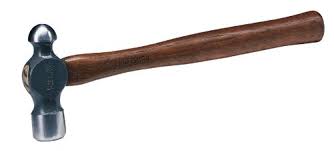
Weapon?

The same logic applies to baseball bats.  Obviously, a baseball bat can be used as a brutal weapon.  It can also be used to hit baseballs -- an "innocent use".  If a baseball player is found with a bat and he is charged with the crime of possessing an illegal club, he should be able to defend himself by arguing that, in this context, his bat is not a "weapon".

The "innocent use" argument is a little more complicated than a lot of people realize, though.  In order to raise the defense at trial, the judge must first find that the object in question has some innocent use.  Think of the ball peen hammer and the baseball bat -- both of these items are commonly used for innocent purposes.  If the judge agrees that the item may possibly be used for some lawful activity, then the defendant may argue that his hammer is just a tool, or his bat is just a piece of sporting equipment.

But that's not the end of the story.  Just because your object has some innocent use doesn't mean that it's 100% legal to possess it at all times.  If the defendant raises the "innocent use" argument, then the prosecutor must prove beyond a reasonable doubt that the defendant intended to use the object as a weapon.  They may build their case with circumstantial evidence by considering the totality of the circumstances -- when, where and how was the defendant found carrying the item?  If the baseball player was arrested while leaving a baseball game and wearing a baseball uniform, then the context of the situation looks pretty innocent.  If a baseball player is driving around on a Saturday night with a bat behind the seat of his car, it looks less innocent.  If the jury believes that the baseball player intended to use his bat as a weapon, he can still be convicted.

Now, this is the nuance I wanted to explain regarding the "innocent use" defense:  if the item is clearly a weapon (brass knuckles, a cane sword, a baseball bat with a nail through it, etc.), the judge will not allow a defendant to argue "innocent use".  In that case, the prosecutor does NOT need to prove that the defendant actually intended to use the item as a weapon.  Intent is irrelevant.  When the item is clearly a weapon, then the DA only needs to prove that the defendant knew that it was capable of use as a weapon.

There is a common misconception that gets a lot of people into trouble here.  Many people falsely believe that they have a defense to weapons charges if they simply call some illegal weapon a "paperweight" or a "sculpture".  A quick search on Amazon will turn up page after page of brass knuckles mislabeled as "novelty items", "costume jewelry" or "for entertainment purposes only".  In California, those are not valid defenses.  If an object obviously looks like a set of brass knuckles, the judge will not allow the defendant to argue that they were actually something "innocent".  And remember, the DA doesn't even need to prove that the defendant intended to use his brass knuckles as weapons, only that the defendant knew that the item was capable of use as a weapon.

There are many possible defenses to weapons charges.  If you or a loved one has questions about possessing weapons in California, call us for a free attorney consultation.  (714) 449-3335.  Ask for John.

Thanks for reading.

Fullerton Weapons Lawyer

Thursday, February 14, 2019

Brass Knuckles in California

Image from DefenseDevices.com

California has notoriously restrictive laws regarding possession of weapons, so it shouldn't be any surprise that brass knuckles are completely prohibited in the Golden State.

That prohibition includes possession, manufacture, importation and sales of any type of "hardened knuckles", whether they're made of metal, wood, composite (plastic) or even paper -- that's right, section 16680 of the California Penal Code specifically bans "any device or instrument made wholly or partially of wood or paper products", if that object meets the other criteria of hardened knuckles.

And the definition of "hardened knuckles" is pretty broad.  Basically, it includes any device used for offense or defense of the hand, either to protect the hand from injury when striking, or to increase the injury inflicted upon another.  On its face, this seems to include some common self-defense tools that are freely available on Amazon, like these kubaton keychains:

Item described on Amazon as "EIOU Self-Defense Key Chain"

The penalties are no joke, too.  If the weapon is made of some material other than metal, then the offense is a misdemeanor punishable by up to 6 months in jail and a fine of $1,000.  If the device is made wholly or partially of metal, then the offense can be treated as a felony, with a maximum prison sentence of 3 years.

There are many possible defenses to the charge of possessing an illegal weapon.  One common argument is that the item is not a weapon, it's a tool for some other "innocent use".  Think of motorcycle gloves with protective metal over the knuckles, or a ring that covers more than one finger.  Those items fit the definition of "hardened knuckles", but they're also commonly used for purposes other than as weapons.  If the judge determines that the object has some innocent use, then the DA must prove that the defendant actually intended to use the item as a weapon.

This argument is a little trickier than some people understand, though.  To successfully raise the "innocent use" defense, your lawyer must first prove that the object HAS some innocent use.  If the object is plainly a weapon -- and designed solely for use as a weapon -- then the defense is not available.  In that case, the prosecutor only needs to prove that the defendant knew that the object was CAPABLE of use as a weapon.  The DA does NOT have to prove that the defendant INTENDED to use the item as a weapon.  This is a nuance that trips a lot of people up.  There's a common misconception that brass knuckles are legal if you simply call them a "paperweight", or if you claim that they have some other innocent purpose.  If the object is obviously a set of brass knuckles, then the judge will not allow you to raise the "innocent use" defense.

The "self-defense" argument is another one that trips up a lot of my clients.  To successfully claim that you possessed an illegal weapon in self-defense, you have to prove some very specific things:
  1. You reasonably believed that you or someone else was in IMMINENT danger of death or of some serious bodily injury.  "Imminent" danger means immediate danger, not some future threat of harm, no matter how great or likely the harm is believed to be. 
  2. You reasonably believed that the immediate use of force was necessary to defend against that danger.
  3. The weapon became available to you without planning or preparation on your part.  You didn't plant the weapon there in case you needed it later.  
  4. You possessed the weapon temporarily, and not for any period of time longer than was necessary for self-defense. 
  5. No other means of avoiding the danger was available, AND
  6. Your use of the weapon was reasonable under the circumstances. 
Obviously, these criteria describe a very specific and unlikely scenario.  I talk to a lot of clients, though, who get into trouble because they possess weapons "for self-defense".  Unfortunately, I have to break the news to them that their situation does not qualify for a "self-defense" argument.  If you keep brass knuckles in your car "just in case", then you're violating the 3rd rule.  It's not a defense to argue that you possessed brass knuckles because you've been attacked before, or that you work in a dangerous area.  As you can see, the "self-defense" argument is more complicated than some people imagine.

It's also not a defense to argue that you purchased the item on Amazon, therefore it must be legal.  Amazon is full of items that are illegal to possess in California.  The seller might be outside of the state and beyond the reach of California law, or they might simply be a low enforcement priority.  Either way, you may be arrested for possessing an item that you purchased openly on a reputable site like Amazon or Ebay.

The law regarding "hardened knuckles" is especially frustrating because it is enforced so unevenly.  A police officer might spot your kubaton keychain (pictured above) and not say anything because it's not worth his time, or because he personally supports a woman's right to defend herself.  You might carry the item aboard an airplane 100 times without any issue.  But one day, a security screener at a public event might spot the object, recognize it as a "weapon", summon police and have you cited or arrested.  It's not right and it's not fair, but it is common.

If you or a loved one has questions about "hardened knuckles" or any other weapons in California, call us for a free attorney consultation.  (714) 449-3335.  Ask for John.

Thanks for reading.

Fullerton Weapons Lawyer

Thursday, July 26, 2018

Is Open Carry Now Legal in California?

The big news this week comes from the 9th Circuit Court of Appeals in California.  The traditionally (notoriously?) left-leaning federal court delivered its second pro-gun ruling in as many weeks, and pundits on both sides of the gun control debate are losing their minds.  Today, I want to spend a minute breaking down what this ruling actually means, and where we go from here.

On Tuesday, a 3-judge panel of the court announced its decision in the case of Young v. Hawaii.  The State of Hawaii requires citizens to apply for a county-issued license before they may openly carry firearms in public.  The plaintiff in this case had applied for a license and been denied twice.  He argued that the state's restrictive laws regarding carrying firearms in public violated the 2nd Amendment, and court agreed.

To explain their reasoning, the majority cited the recent decisions in Heller and McDonald.  Those two cases established the right of law-abiding adults to keep handguns in their homes for self-defense.  In Peruta, though, the court determined that the citizens do NOT have a right to carry concealed weapons in public.  Since citizens have a constitutional right to "bear" (or "carry") weapons for self-defense, but they DON'T have a right to carry concealed weapons in public, the court reasoned that they must have a meaningful opportunity to carry firearms openly in public places for their own protection.  States can make some reasonable rules and regulations about carrying weapons in public, but they may not simply prohibit the practice.

The 9th Circuit sent the case back to the lower court in Hawaii for further proceedings consistent with the newly-announced rule.  Now, the legal team for the state must decide whether or not to request an en banc ruling, where every judge on the circuit would have an opportunity to hear the matter.  If the case is heard by a full panel of judges in the 9th Circuit, it is very likely that the ruling would be reversed again.  Of course, that would inevitably lead to another appeal to the Supreme Court, where a conservative majority could reverse again and announce a nationwide right to openly carry handguns in public.

For now, this latest ruling from the 9th Circuit only narrowly applies to Hawaii's rules regarding the issuance of "open carry" licenses.  It seems to open the door, though, to more challenges over California's restrictive regulations about carrying weapons in public (or in vehicles, etc.).  Unlike Hawaii, California doesn't even allow law-abiding citizens to apply for a license to openly carry a firearm in public -- all "open carry" is completely banned in the Golden State.  It is virtually impossible for the average citizen to obtain a concealed carry license in most parts of the state, too.  If the ruling in Young withstands the next round(s) of appeals, that might change.

Stay tuned to see how this plays out.

If you or a loved one has questions about firearms and your rights in California, call us for a free attorney consultation.  (714) 449-3335.  Ask for John.

Thanks for reading.

Fullerton Gun Lawyer

Wednesday, April 18, 2018

How to Fight a Restraining Order When the Facts are BAD

I've previously written on this blog about the process of getting or fighting a restraining order in California.  If you haven't already, take a moment to read some of the basics here.  In these introductory articles, I explain the legal procedures and the issues you should be prepared to discuss at your hearing.

I've also previously written on this blog about a common situation -- fighting a restraining order when the petitioner is crazy.  Defending yourself against a crazy person requires a special strategy, and that's not the focus of this article.

Today's post is specifically about fighting a restraining order when the facts against you are BAD.  Maybe you've said or done things that you're not proud of, and maybe the petitioner has proof (emails, text messages, surveillance videos, reliable witnesses, etc.).  Even if you've behaved badly, and even if we all agree on what happened, it's not necessarily a slam dunk that the petitioner will walk out of court with a restraining order in hand.  There are several effective strategies for fighting restraining orders, even if the facts appear bad at first glance.

There are situations where it may be futile to deny your bad behavior.  If the petitioner has reliable proof, you will harm your own case by disingenuously trying to deny the facts.  You will look like a liar, you will lose your credibility, and you will lose your case.  Of course, that's not to say that you should admit to things you haven't done or confess when the evidence is weak.  I'm speaking specifically about situations where you behaved badly and the petitioner can prove it.

Bad facts must be justified, excused or explained.  A justification is a defense where you essentially argue that you did the RIGHT thing under the circumstances.  Your behavior might have been illegal or improper in other situations, but perfectly proper in that particular place and time.  "Self defense" or "defense of others" are common justifications.  In most situations, for example, it is illegal to threaten someone with a weapon.  If you threaten your neighbor with a bat to make him stop beating his wife, though, you've done a GOOD thing.  If your neighbor then files a restraining order against you for threatening him with a bat, you should admit that you engaged in that conduct (you DID threaten him with a bat), and you should explain to the judge why your actions were justified under the circumstances.

If you can't justify your actions, maybe you can excuse them. An excuse is a defense where you acknowledge that your behavior wasn't "good", but you argue that you don't deserve to accept the blame.  If, for example, you were involuntarily drugged, you might not deserve to be punished for your behavior while you were under the influence.

If your behavior can't be justified or excused, maybe it can at least be explained.  An explanation is a defense where you admit that you did the wrong thing, but you argue that your blame is mitigated or reduced under the circumstances.  For example, maybe you were provoked with offensive insults and you responded with violence.  We don't agree that your violent reaction was appropriate, but maybe we understand why you reacted the way you did.  Your outburst was out-of-character and it won't happen again.

That last part is important -- it won't happen again.  As I've previously explained on this blog, a restraining order is an "injunction".  An injunction is a court order that is intended to prevent some future harm that has not yet happened, not to punish you for some past wrongdoing.  This is tricky.  The issue that the judge must decide at the restraining order hearing is: has the petitioner proven that the respondent has harassed him or her?  Sometimes -- and this is risky -- we must acknowledge that the respondent has committed some act of violence, threats or harassment against the petitioner, but we establish that the harm is not likely to reoccur in the future.  Since we're talking about an injunction and not a criminal violation, the analysis doesn't stop with, "did this happen?".  A restraining order is not appropriate unless the harm is likely to happen in the future.  If the harm has already passed and is not likely to happen again, then a restraining order is not appropriate.  There is valid case law to support this defense, but the proper citations and legal argument must be presented effectively by an experienced, competent lawyer.  Don't try this at home.

If you or a loved one has questions about a restraining order in California, call us for a free attorney consultation.  (714) 449-3335.  Ask for John.

Thanks for reading.

Wednesday, March 14, 2018

Can Hands Be Considered "Deadly Weapons" in California?


Is it true that Mike Tyson's hands are considered "deadly weapons"?  If Chuck Norris karate chopped someone in a bar, would Mr. Norris be charged for "assault with a deadly weapon"?  In California, the answer is "maybe".

Section 245 of California Penal Code defines aggravated assault, commonly referred to as "assault with a deadly weapon, or by force or means likely to induce a great bodily injury".  To be guilty of violating PC 245, the DA must prove that the defendant willfully performed some act that would likely injure someone else.

If the defendant uses or attempts to use a weapon against a victim (he swings a baseball bat toward someone, or throws a rock at someone's head, etc.), a jury could convict him of violating PC 245 because those actions are likely to cause injuries, regardless of whether or not the defendant actually harms anyone.  Those are both examples of "assault by force or means likely to result in a bodily injury", even when nobody actually gets hurt.

A defendant can also be guilty of violating PC 245 without actually using any weapon.  Remember, using a weapon is NOT an element of this crime.  A defendant can be convicted for PC 245 if he and a friend (or several friends) cooperate to jump someone.  Even if none of the assailants use weapons, jumping someone in an unfair fight is likely to cause serious injuries to the target of that beating.  Anyone who participates in the beating is guilty of violating PC 245.

Similarly, the DA might file PC 245 charges in a case where a fair fight devolves into a beating.  For example, imagine two men voluntarily choose to fight in a parking lot.  The fight starts fairly and the two men are evenly matched, but one man slips, drops his hands, and gets knocked out.  After he falls unconscious, the other man continues kicking and beating him on the ground.  Obviously, beating and kicking an unconscious man is likely to cause serious injuries.  Even though this confrontation began as a fair fight, and even though the victor never used a weapon, he could still be charged and convicted for violating PC 245.

Back to my example of Mike Tyson or Chuck Norris assaulting someone in a bar fight: if either world-renowned fighter took a swing at a drunken amateur, it is probably likely that the poor victim would suffer some serious injury.  If a jury agreed, then Iron Mike and Master Norris could be convicted of PC 245, commonly known as "assault with a deadly weapon", simply for punching someone with a bare fist.

In the real world, though, cases aren't usually so cut-and-dry.  There are many possible defenses to assault charges, including self-defense.  If you or a loved one has been arrested for assault in California, call us for a free attorney consultation.  714 449 3335.  Ask for John.

Thanks for reading.

Friday, February 14, 2014

What Kinds of Weapons Can I Legally Possess in California?


Updated 8/10/23:  Earlier this week, the 9th Circuit Court of Appeals ruled that butterfly knives are protected by the Second Amendment and that law-abiding adults have the right to carry them in public for self-defense.  Read my post about it here. 

Ever since the Supreme Court delivered its historic ruling in Bruen earlier this year, laws regarding weapons have been changing quickly.  Check back often for updates as they become available.  

The laws regarding weapons in California are (like most of our laws), complicated, nuanced, counter-intuitive and not entirely rational.  We have specific rules to govern all sorts of weapons, including some you've probably never even heard of (I had to look it up, but a "sandclub" is exactly what it sounds like).

Today, I want to talk specifically about knives, striking weapons (like clubs and batons), martial arts weapons, and a few other favorites.  I'll reserve firearms for another day because guns probably deserve their own post. 

For the sake of easily understanding how all the laws on this subject work together, I've created my own handy 4-tier classification system.  This is an over-simplified glance at a few common weapons and the restrictions regarding their possession and use.  Since I invented this chart, you won't find it in any law book.  Don't cite to this chart in court or when you're dealing with police.  Nobody will know what you're talking about if you argue that your folding knife is a "Class-4 pocket knife" and not a "Class-2 switchblade".  The chart is just a simple way to wrap your head around a complicated and poorly-organized series of laws.

My 4 tiers are as follows:

-Class 1:  Weapons that are illegal to own, possess, manufacture, import, sell, loan, give away, offer for sale, etc.  Put simply, these weapons are ILLEGAL in California for any purpose.  You could be arrested just for having them in your own home for self-defense (with a few exceptions).  
  • Any weapon that is disguised or not immediately recognizable as a weapon (any type of knife that is designed to look like an air gauge, lipstick case, writing pen, walking cane, belt buckle, hair brush, etc.)
  • Any type of hardened knuckles (wooden, metal or composite / plastic)
  • Any type of billy club, blackjack, sap, sandbag, sandclub, sap or slungshot (this is not a typo.  A "slungshot", also called a "monkey fist", is a weighted ball on a rope).  Courts have determined that "billy club" includes any type of bat, stick, club or baton if it's intended use is a weapon, even for home defense.  Wait, that can't be right.  But it is.  Keeping a baseball bat under your bed as a weapon for home defense is arguably illegal in California.  That's right, a loaded shotgun under the bed = legal.  Baseball bat under the bed = illegal.  Of course, it would be virtually impossible for police to enforce this absurd law unless the bat were used to commit some sort of crime.  In the absence of some other criminal activity, I would argue that the 2nd Amendment's Right to Keep & Bear Arms trumps California's nonsensical rule against club-type weapons in the home for self-defense.  I've never heard of a law-abiding person being prosecuted for possession of a baseball bat in his own home. 
  • Class 1 also includes "nunchaku" (nunchucks), throwing stars and other "martial arts-type" weapons, with exceptions for martial arts schools and instructors.  

-Class 2:  Weapons that may be owned or possessed at home, but may not be carried in public or within the passenger area of any vehicle.  Class 2 weapons may be manufactured and / or imported into the state, but may not be sold, loaned, transferred or given away in California.
  • Switchblades and butterfly knives with blades longer than 2 inches fall within this class -- they may be owned and possessed at home, but not in public or in the passenger area of your car.  You may not sell them, loan them to a friend, give them away, or transfer them to any other person.  Note: This is all up in the air since the 9th Circuit Court of Appeals ruled in Teter v. Lopez.  In that case, the court invalidated a Hawaii law that prohibited the possession of butterfly knives.  

-Class 3:  Weapons that may be carried openly upon the person or within the passenger area of a vehicle, but may not be concealed upon the person.  
  • Any dirk or dagger.  "Dirk" and "dagger" are both synonymous terms for stabbing weapons. This includes anything with a fixed blade, capable of being used to inflict death or serious injury by stabbing.  Folding knifes don't count, no matter how big they are, as long as the blade is not extended and locked into place while concealed.  Section 20200 of the California Penal Code reads, "A knife carried in a sheath that is worn openly suspended from the waist of the wearer is not concealed within the meaning of [this code]".  
  • When it comes to knives, size really doesn't matter in California.  A few local codes prohibit concealed knives of various lengths, but the state Penal Code makes no distinction between giant knives and tiny ones.  If the knife folds, it may be carried concealed, even if the blade is a foot long.  If the blade is fixed, it may NOT be worn concealed, even if the blade is only 3 inches.  And there is no maximum length for blades that are worn openly.  That means swords are legal, but small neck knives are not.  I didn't make up these rules.  

-Class 4:  Weapons that may be carried and concealed upon the person, subject to some restrictions.  Generally, law-abiding adults may possess weapons in this category for self-defense.  Felons, addicts, minors, people on probation, and people with certain misdemeanor convictions may be prohibited from carrying even class-4 weapons.  Class-4 weapons include:
  • Tear gas / pepper spray
  • Stun guns
  • Folding knifes, as long as the blade is not open and locked into place while concealed.

There are many possible defenses to weapons charges in California.  Often, illegal weapons are discovered by police during illegal searches of your property.  If a search is performed without your permission, without probable cause and without a warrant, there may be grounds to suppress anything discovered as a result of that search.  Only a qualified criminal defense attorney can tell you whether or not you might have a defense based on an illegal search or a violation of your right to privacy.  

Even if you are found to be in possession of an item that fits the legal description of a prohibited weapon, you might have a compelling argument that the item itself is not actually a "weapon".  If it's an antique, an heirloom, a movie prop, a piece of art, or if the possessor has some innocent explanation for the item (i.e. grandpa brought it home from the war, etc.), then the item might not be a "weapon" within the meaning of the law.  For example, a baseball bat could be used to play baseball or it could be used to break the knees of a rival bookie.  If a person is found in possession of a baseball bat, a baseball glove, a bucket of baseballs and a pair of baseball cleats, then the bat itself is clearly a piece of sporting equipment and not a weapon.  Of course, baseball bats may be used to legally play baseball in California.  On the other hand, if a person is found with a baseball bat behind the seat of his car, with no other sporting goods in the vehicle, he's going to be arrested on suspicion of carrying an illegal baton.  Keep in mind also that "self defense" is not considered to be an "innocent explanation", and it is not a defense if you are charged with possessing an illegal weapon. 

If you or a loved one is accused of possessing an illegal weapon in California, call our office for a free attorney consultation.  (714) 449-3335.  Ask for John. 

For more information visit our website.  Orange County Weapons Attorney.

Thanks for reading.  

Wednesday, July 17, 2013

Is California a "Stand Your Ground" State?

Disclaimer: I am licensed to practice law in California, not Florida.  This blog post will specifically discuss California's approach to self-defense laws.  

Update: Stevie Wonder recently told an audience in Quebec that he would boycott any "stand your ground" states.  Mr. Wonder currently lives in Woodland Hills, CA.  Somebody, please read this to Stevie.  

Since the verdict in the George Zimmerman case was announced last Saturday, "stand your ground" laws have been the subject of a lot of discussion in the news media. It should be noted parenthetically that "stand your ground" laws had absolutely nothing to do with the Zimmerman verdict -- George Zimmerman did NOT assert a "stand your ground" defense.  The phrase "stand your ground" never even arose during the trial, except when prosecutors displayed a video in which Zimmerman denied having any knowledge of such laws.  So, while it should be understood that SYG played exactly zero role in Zimmerman's acquittal, those laws still seem to be generating a lot of controversy.  Perfect blog fodder.

To understand SYG laws, you first have to understand the traditional "common law" approach to self-defense.  Under the historical British rules, the rules from which our system evolved, a person was only justified in using deadly force against an attacker if such force was truly a last resort.  If a person came under attack in a public place, he had a "duty to retreat" -- that is, he was expected to run from his attacker.  Force was only permissible in self-defense if retreating was not a viable option.  There was a major exception to this rule, known as the "Castle Doctrine".  The Castle Doctrine said that a person had no duty to retreat if he was attacked within his own home or place of business.

The trend in many modern jurisdictions, including California, has been away from the very narrow, traditional rules of self-defense.  Why should an innocent person be required to flee from a violent criminal?  If I haven't done anything wrong, I should have a right to defend myself against an attacker wherever that attack might occur.  In fact, that's exactly what the law says in California.  A person who is assaulted in California has no duty to retreat.  He may defend himself if he believes, and a reasonable person in his position would believe, that force is necessary to protect himself from an imminent threat.  We even go one step further -- the law in California says that a person who is attacked may even pursue his assailant if necessary.  CALJIC 5.50 reads:

A person threatened with an attack that justifies the exercise of the right of self-defense need not retreat.  In the exercise of his right of self-defense a person may stand his ground and defend himself by the use of all force and means which would appear to be necessary to a reasonable person in a similar situation and with similar knowledge; and a person may pursue his assailant until he has secured himself from danger if that course likewise appears reasonably necessary. This law applies even though the assailed person might more easily have gained safety by flight or by withdrawing from the scene.  

It should be obvious that SYG laws were simply irrelevant to the Zimmerman defense.  According to Zimmerman, he exited his vehicle because he lost sight of a suspicious person in his neighborhood.  At the time that he exited the car, Zimmerman had no reason to feel threatened. After walking some distance and searching for the suspicious teenager in the hooded sweatshirt, Zimmerman gave up and began walking back towards his waiting vehicle.  Martin allegedly surprised Zimmerman by punching him in the face, knocking him to the ground and beating his head against the concrete.  Zimmerman did not have an opportunity to flee once the threat began, therefore there should be no question about the propriety of Zimmerman "standing his ground". Regardless of whether or not you believe Zimmerman's story, it must be recognized that the defense simply did not rely on a "stand your ground" argument.  As noted above, the fact that Zimmerman initially exited his vehicle is irrelevant because Zimmerman did not believe that he was facing an imminent threat at the time that he did so.

The most famous "stand your ground" case in California involved a young man named Calvin Broadus, better known as Snoop Dogg.  On August 25, 1993, Snoop and his bodyguard, McKinley Lee were in a car near Woodbine Park in Los Angeles.  Snoop was driving the vehicle and Lee was riding in the passenger seat.  The men were confronted by 20 year-old Phillip Woldemariam, who was alleged to be a member of a Long Beach street gang called the "By Yerself Hustlers". Woldemariam flashed gang signs and insults ensued.  Snoop and Lee then pursued Woldemariam into the park, where Lee shot and killed the man.  Both Snoop and Lee were charged with murder. Both were found "not guilty".  The jury believed that Snoop and Lee acted in self-defense, even though they clearly had an opportunity to avoid the confrontation by fleeing (or simply by NOT pursuing Woldemariam).

Remember the outrage when Snoop was acquitted for pursuing and murdering a young, black man?  Me neither.

If you or a loved one has questions about self-defense in Orange County, Los Angeles, Riverside or San Bernardino, call our office for a free attorney consultation.  (714) 449-3335.  Ask for John.

Thanks for reading.

Fullerton Self-Defense Lawyer


Friday, February 15, 2013

Use of Force by Police During the Dorner Standoff: Legally Justified?


This past Tuesday, February 12, deputies from the San Bernardino County Sheriff's Department cornered fugitive murder suspect Chris Dorner in a Big Bear vacation cabin.  Dorner had been on the run for nearly a week after allegedly murdering two people in Irvine and then shooting two police officers in Riverside, one of whom later died from his wounds.  After being surrounded in the cabin, he apparently attempted to shoot his way out at least twice, fatally wounding another officer.  Details are still emerging about the precise timeline of events in the standoff that followed, but it appears that the SBSD eventually opted to deploy some heavy-duty CS gas into the cabin.  Within minutes of deploying the incendiary gas, the entire structure became engulfed in flames.  No attempt was made to extinguish the blaze as the cabin was consumed by the fire.  A body later discovered in the burned out rubble was determined to be Dorner's.

The usual cast of characters has now squared off to allocate blame / thanks / condemnation / praise.  The "back-the-badge" crowd has lauded the bravery of the heroes who selflessly gave their own lives to protect ours.  The good folks over at CopBlock.org blame the militarization of police in general for this debacle.  They accuse the SBSD of acting as judge, jury and executioner and question whether or not any effort was really made to take Dorner alive.

I want to spend some time analyzing the use of force by police in this situation to determine whether or not the burning of the cabin was legal or justified.  Of course, the San Bernardino County Sheriff John McMahon has publicly denied that his deputies intended to ignite the fire.  Transcripts from police scanners at the time contradict this official explanation.  Just before the incendiary gas canisters were deployed, officers were heard saying over their radios, "We're going to go forward with the plan, with the burner...seven burners deployed...and we have a fire".

Of course, not enough information has been made public to determine whether or not the Sheriff's Department started this fire intentionally.  For the sake of discussion, let's assume that they did, or at least that the SBSD knew that launching CS gas into a wooden cabin was likely to ignite a deadly blaze.

First-hand witness accounts also suggest that Dorner actually took his own life with a single self-inflicted gun shot to the head as the cabin burned around him.  I realize, therefore, that Dorner was not DIRECTLY killed by police.  Based on the limited information available, we can surmise that the fugitive died at his own hand, but that the SBSD also deployed their own "lethal force", and it is this use of potentially lethal force by police that I want to examine.

So assuming that the SBSD either intentionally lit the blaze, or else simply ignored the known risks that are inherent when igniting a flammable gas inside a flammable structure (the definition of "recklessness"), was that use of deadly force "legal" or "justified" under the circumstances?  Let's look at the laws.

Starting with the obvious: murder is illegal, even if committed by the police (see previous posts re: Kelly Thomas).  Of course, not all killing is "murder".  There are many circumstances under which police may lawfully employ deadly force in dealing with dangerous fugitives.  CALJIC 5.26 reads in relevant part:

Homicide is justifiable and not unlawful when committed by a public officer...when necessarily and reasonably committed in arresting any person charged with a felony, and who is fleeing from justice or resisting arrest.  

Now we break that down, element by element:

"Public Officer" includes any law enforcement personnel, like deputy sheriffs and local police.

"Necessarily and reasonably committed" is up for some argument.  Were any other options available to the officers?  This is a question that I'm not equipped to answer.  Considering that the cornered fugitive allegedly fired hundreds of rounds at the police during the standoff, killing one, I think that a judge is extremely unlikely to second-guess the tactical decisions of commanders on the ground.  Daylight was fading and officers feared that Dorner might have night-vision goggles, which could have given him a major advantage in the dark.

"Charged with a felony" is pretty self-explanatory.  The District Attorneys from both Riverside and Orange County had filed murder charges against Dorner before the standoff began.

"...who is resisting arrest" also seems pretty well-established.  Again, Dorner was actually shooting at officers who had the cabin surrounded.  He had already killed two other officers during the manhunt and had demonstrated his intent to kill others.

Based on the letter of the law, I believe that the police were legally justified in using deadly force against Dorner.  I am not a tactical expert and have never served on a SWAT team, so I will leave all counter-factuals to other armchair quarterbacks.  Rather than arguing the strategic merits of burning down the home, I want to focus on the law of the matter.  Did the police "murder" Dorner (or at least break the law by intentionally employing deadly force)?  I don't believe that they did.

Mark your calendars: I am defending the police here.  And I'm not alone on this one.  David Klinger is a use-of-force expert at the University of Missouri at St. Louis.  He told the LA Times, "What difference does it make if one of the officers puts a round in his head, drives the armored vehicle over his body when they're knocking the building down, or he dies in a conflagration?  If he is trying to surrender, you can't do any of those things.  But if he is actively trying to murder people, there's no doubt that deadly force is appropriate and it doesn't matter which method is used to deliver it".

Sorry, CopBlock.org.  No hard feelings, just the law.  I gave you a couple links if that helps.

Am I missing the point?  Feel free to comment below.  Thanks for reading.

Thursday, July 19, 2012

Vigilante Justice, Part II: The Citizen's Arrest


Update:  http://latimesblogs.latimes.com/lanow/2012/08/lancaster-residents-help-nab-suspected-serial-burglar.html  This article was posted in today's Los Angeles Times.

I had so much fun with my previous post on "Vigilantism and the Law" that I've decided to devote a series of posts to some of the legal issues surrounding vigilantism.  For part II in my series, I've chosen to write a little bit about the legalities of the "citizen's arrest".  As a case study, I've selected a recent incident that took place aboard a subway train in Brooklyn, New York (*Disclaimer:  I am licensed to practice law in California, but not in New York.  Legal analysis of the subway incident will apply CA law, even though I understand that it did not occur in CA).  Today's course materials are available for your viewing pleasure here.

Here's the factual scenario: Around 9:30 PM on Friday, July 13, two women followed a young man as he boarded a train car at Brooklyn's Lorimer station.  They were pointing and yelling at the man, who they accused of sexually assaulting them on the train platform moments before the doors of the train car opened.  The women demanded that he exit the train and wait for police to arrive. Other passengers quickly joined in and helped the women physically drag the suspect from the train. Bystanders restrained him until arresting officers arrived.

This is the classic, textbook example of the "citizen's arrest".  By definition, a citizen's arrest occurs when a private person (rather than a police officer) takes another person into custody on suspicion of having committed some crime.

In the year 1872, the California State Legislature bestowed upon us sections 837, et seq., of the California Penal Code.  That series of laws provides a system by which non-sworn, private citizens may lawfully detain and arrest their peers if certain conditions are met.  Under PC 837, a citizen may arrest a suspect in any of the following situations:

-When the private person has actually witnessed a suspect commit or attempt to commit any crime (felony or misdemeanor) in his or her presence,
-When the person being arrested has actually committed a felony (regardless of whether or not it occurs in the presence of the arresting citizen), or
-When a felony has actually been committed (regardless of whether or not it occurs within the presence of the arresting citizen) and the person making the arrest has reasonable suspicion to believe that the suspect committed it.

"The person making the arrest must, on request of the person being arrested, inform the latter of the offense for which he is being arrested" (PC 841)

Penal Code section 839 further provides, "Any person making an arrest may orally summon as many persons as he deems necessary to aid him therein" ("Hey, y'all, help me hold this guy!"). 

It gets even better.  "To make an arrest, a private person...may break open the door or window of the house in which the person to be arrested is, or in which they have reasonable grounds for believing the person to be, after having demanded admittance and explained the purpose for which admittance is desired." (PC 844)

...And if you get locked INSIDE a suspect's house while making a citizen's arrest, PC 845 says that you may break open a door or window if necessary to get OUT.  Apparently, there was a time when California must have had a real problem with private citizens becoming trapped inside the homes of people that they had been attempting to arrest because the arresting citizen was reluctant to break down the door for fear of legal repercussions.  This problem must have become so dire that the legislature felt it necessary to pass a law authorizing such entrapped citizens to break doors or windows to escape.

Sworn peace officers DO enjoy a few more protections than the average man-on-the-street when making arrests, however.  For example, a peace officer cannot be held personally liable in a civil suit for false arrest if the officer acts with "reasonable cause" to believe that the arrest is lawful. You and I do not enjoy this qualified immunity.  If you or I attempt a citizen's arrest and we nab the wrong guy, we can expect to get sued.  Peace officers may also use "all necessary means" of force to effect arrests in certain limited situations, whereas private citizens may only use "such restraint as is reasonable".

Now, let's take what we've just learned and apply it to the above-mentioned subway incident. When the camera starts rolling, the two female victims have just witnessed a crime occur in their presence.  They had been sexually assaulted and they were attempting to restrain the suspect until police could be summoned.  Unfortunately for the women, they were physically unable to restrain the man because of his relative size and strength.  Fortunately for the women, however, Penal Code section 839 permitted them to summon "as many persons as [they deemed] reasonably necessary to aid [them]" in effecting the arrest.  They hollered and other subway riders sprung into action.  Several men physically dragged the suspect onto the train platform and held him until subway police responded to the scene and took the man into custody.

One thing that immediately jumped out at me about the incident is the surprising lack of force used to effect the arrest.  Several men grab the suspect by the torso and neck, but I did not see the degree of violence that might be expected in a "lynch mob-type" environment such as this. The suspect is manhandled and thrown to the ground, where he is restrained by strangers, but I could not discern a single punch thrown or any sign that excessive force was applied.  My impression was that the arresting citizens employed only a "reasonable" degree of restraint and did not apply anything near "excessive force".  As always, please feel free to comment and to tell me that I'm an idiot if you disagree.

Thanks for reading! Stay tuned for more fun and exciting legal news and analysis.  And remember, if you or a loved is arrested (by police or citizens), call us for a free attorney consultation.  (714) 505-2468.  Ask for John.

Orange County Criminal Defense Attorney


Friday, June 22, 2012

Vigilantism and the Law

Vigilantes have been part of the American social and legal landscape ever since a group of farmers faced down the Redcoats at Concord and Lexington.  From the posses of the Old West to the lynch mobs of the Post-Reconstruction South, bands of armed individuals have shaped American history for better or for worse.  Driven by the idea that government is unwilling or unable to enforce the law, Americans have historically done so themselves.

Vigilantism takes many forms today, from self-appointed border watchers like the Minutemen to Neighborhood Watch volunteers.  Vigilante "justice" has recently grabbed headlines with sensational stories like that of George Zimmerman and Treyvon Martin.  After much reflection, however, I've decided not to devote this post to a legal analysis of Zimmerman's defense for a couple reasons.  The foremost reason that I've decided not to write about George Zimmerman is simply because the basic facts of that case are still unknown.  It's impossible to thoroughly dissect the legal intricacies of such a complicated matter when there are still so many moving parts.  Accounts of Treyvon Martin's death vary so wildly that any analysis would be more speculative than illuminating.  The other reason that I chosen not to devote this post to George Zimmerman is that I simply don't have anything profound to say that hasn't already been said.

Instead, I've decided to devote this post to the story of the unnamed Texas father who beat to death Jesus Mora Flores, 47, after he caught Flores in the act of raping his 5-year-old daughter.  The facts of the case seem to be well-established and corroborated by several witnesses.  On June 9, the 23-year-old father was helping a friend perform some farm work in the town of Shiner, Texas (famous for Shiner Bock Beer).  The father had sent his 8-year-old son and his 5-year-old daughter to perform a chore.  The son returned shortly later and reported that a man had taken the 5-year-old.  After a search of the farm, the girl's screams led the father to a barn, where he encountered Flores in the act of sexually assaulting the young girl.  Using only his bare hands, the 23-year-old man beat Flores about the head and neck.  Emergency responders found Flores with his pants and underwear around his ankles.  He was declared dead shortly thereafter.  Medical exams confirmed that the girl had been sexually assaulted.

Local prosecutors referred the case to a grand jury, which declined to indict the father last week.

It's hard to find fault with the father's actions from a moral standpoint, but what about legally?  How does / should the law treat this form of vigilantism?

At first glance, the father appears to have at least 2 compelling defenses to a potential murder charge.  The strongest likely defense would be that of self-defense.  Self-defense falls under the umbrella of "necessity" defenses.  An otherwise-unlawful act is justified by "necessity" when the defendant can convincingly show that his act prevented some greater harm and that the act was absolutely necessary (i.e. that no other course of conduct was available to prevent the same harm).  The legal doctrine of "self-defense" is not limited to situations where the actor actually defends himself; self-defense may be claimed when the actor acts in defense of others who are unable to defend themselves, such as here.  Generally, the degree of force used must be proportional to the threat and may not exceed the degree which is reasonable necessary to avoid the greater harm.  For example, one would not be justified in using deadly force to repel a simple assault or some minor crime.

Let's look at how self-defense applies in this situation:  Since the young girl was actually facing imminent harm, any adult would have probably been justified in using the necessary degree of force against her attacker.  After that, it gets murky.  How much force is justified?  One punch?  One blow of a baseball bat?  One shotgun blast?  If the attacker died of a single punch to the head, the father's act would almost certainly be legally justified.  If, on the other hand, the father stomped on the attacker's face after witnesses claim the attack had already ended, self-defense would probably not be found to apply.  Assuming for the sake of discussion that the father used more than the necessary degree of force to stop the attack, he might choose to employ another defense strategy.

Rather than self-defense, the father might argue a defense based on lack of capacity to form criminal intent.  This is sometimes referred to as "temporary insanity" or "adequate provocation".  The crime of murder requires the prosecutor to prove two elements: 1) that the defendant killed another human, and 2) that the defendant acted with "malice", otherwise known as "criminal intent" or "mens rea".  In extremely rare situations, it can be argued that a defendant was so provoked that he cannot be held legally responsible for his response to the provocation.  He was so blinded by rage, for example, that any reasonable person in the same circumstance would have been helpless to control himself and would have reacted similarly.  If he is found to have acted without the mental faculties to understand his actions as he committed them, then he acted without criminal intent and he is not guilty of the crime of murder.

This strategy is rarely used and even more rarely successful, for obvious reasons.  Any indication that the defendant thought before acting negates the entire defense.  The textbook example involves the husband who comes home from work and finds his wife in bed with the neighbor.  If the husband goes to his gun safe, removes his largest-caliber revolver, loads it and shoots the neighbor, he is probably guilty of murder since he had a very brief "cooling off" period in the time that it took him to fetch and load the gun.  If he simply beats the neighbor to death with the bedside lamp, he might have a shot at trial.  Moral of the story: never think before acting.

For discussion of a third possible defense, see "The Wild and Wonderful World of Jury Nullification", below.

Stay tuned for more exciting news and analysis as interesting vigilante stories arise this summer.  Maybe I'll start a "Vigilante Mini-Series" if I can dig up more compelling stories of citizens taking the law into their own hands.  As always, I'm open for suggestions.