The "Twinkie Defense" refers to a legal argument that was used during the 1979 trial of Dan White for the murders of San Francisco Mayor George Moscone and Supervisor Harvey Milk. The term is often used derisively (and incorrectly) in reference to any criminal defense theory that seems absurd.
Unfortunately, some lazy reporting by members of the news media at the time completely misrepresented the defendant's actual argument. That shoddy journalism led to some widespread misunderstanding that persists to the present. Today, the term seems to be misused in popular culture much more often than it is used correctly. In reality, the argument was a sound legal defense and not nearly as ridiculous as it came to be understood. Let me explain.
Dan White had been a San Francisco police officer and firefighter. In 1977, he was elected to the San Francisco Board of Supervisors. Over the following year, a deep political rift arose between him and fellow Supervisor Harvey Milk, which ultimately led White to resign from his position. Shortly after tendering his official resignation, White attempted to rescind it and to rejoin the Board. Milk lobbied against his reinstatement and successfully convinced Mayor Moscone to appoint a more liberal political ally to the vacant seat.
On November 27, 1978, White arrived at San Francisco City Hall with a .38 caliber revolver. He climbed through an open window to elude metal detectors at the building's entrance and proceeded to Moscone's office, where he demanded a meeting with the mayor. Following a verbal argument, White shot Moscone several times, reloaded, and quickly left. White then encountered Harvey Milk in a hallway. He asked Milk to step inside his former office, where he shot and killed the supervisor. White escaped from City Hall, but later turned himself in at a local precinct.
Dan White was charged with 2 counts of premeditated murder. At trial, the prosecutor presented evidence to support the allegation that the murders were carefully planned, including the fact that White had the presence of mind to climb through a window rather than submit to security screening at the building's entrance.
In his defense, attorneys argued that White suffered from severe depression, leading to a state of "diminished capacity". They told the jury that White's mental illness rendered him unable to form the "premeditation" required for a 1st-degree murder conviction. As proof of his depression, attorneys presented evidence of extreme behavioral changes that White had undergone shortly before the murders. Previously, White had been described as a "fitness nut", who exercised regularly and adhered to a strict diet of healthy food. In the weeks leading up to the shootings, though, White's hygiene had deteriorated, he had become alienated from his wife, and he had begun consuming junk food and sugary drinks. These things were all considered to be out of character for him. At trial, psychiatrists described those severe behavioral changes as symptoms of White's depression, not the cause of it. Nobody argued that Twinkies made him insane -- they argued that White was insane, and that his uncharacteristic consumption of junk food was proof that he had temporarily lost his ability to think clearly and to understand the nature of his actions.
Jurors agreed with the arguments of White's defense counsel and returned verdicts of "voluntary manslaughter" rather than 1st-degree murder. Public outrage over the verdicts led to riots and some significant changes to California law. Today, the argument of "diminished capacity" has been abolished in California courts and replaced with the doctrine of "diminished actuality". Defendants can no longer argue that some mental illness rendered them unable to form criminal intent. Instead, they must prove that they actually did not form the requisite intent due to some mental illness. The distinction is subtle but it has had a huge impact on the way that these types of cases are litigated today.
Irresponsible members of the news media fed into the public outrage by grossly misrepresenting White's actual argument. As the story was falsely relayed by several outlets, Dan White had escaped justice by speciously arguing that he was "high" on Twinkies at the time of the killings, or that his excessive consumption of sugar had somehow rendered him "temporarily insane". Sensational but inaccurate stories made national headlines and perpetuated the myth of the "Twinkie Defense" as it persists in popular culture today.
If you or a loved one has questions about "diminished capacity / actuality" or "insanity" in California, or if you just want to talk about the "Twinkie Defense", call our office for a free attorney consultation. (714) 449-3335. Ask for John. We have extensive experience defending against all types of criminal charges in Southern California, including cases where the defendant's competency or mental health may be at issue.
Thanks for reading.
Orange County Criminal Defense Attorney
Thursday, April 25, 2019


Friday, April 12, 2019
Police Took My Stuff. How Can I Get it Back?
Police often seize property during investigations if they believe that the items are illegal to possess or that the property is evidence of a crime.
Of course, police have the authority to collect evidence for criminal prosecutions. Citizens, though, have the right to be free from unreasonable seizures. Individuals in the United States also have the right to Due Process before the government can simply take their property. When these forces collide, courts use a balancing test to weigh the government's need for seizure vs. the individuals legitimate right to keep his stuff.
There are a few different legal procedures that need to be followed to get your stuff back, depending on what the item is, why it was taken, and how the criminal case resolved.
Evidence
If police seize some property that they intend to use as evidence in a criminal case, they generally get to keep it in an evidence locker until the case is resolved. They will not give important evidence back to the defendant while the criminal case is still pending for obvious reasons -- the items may be necessary at trial to prove the DA's case.
After the case is resolved (by conviction, dismissal, acquittal, reduction, plea deal, etc.), the fun part begins. When the case is over, then the items are no longer needed as "evidence". If the owner wants his stuff back, then the government must either return it, or else make a compelling counterargument to convince a judge otherwise. And there are a few good counterarguments.
Contraband
Obviously, the court will not order the police to return something that is illegal to possess. Illegal weapons, for example, must be destroyed by law after a case is resolved. The same is true for drugs, drug paraphernalia, and counterfeit goods.
These hearings get interesting when we don't agree on whether or not a particular item is technically "contraband". Cases involving large loads of marijuana, custom-built firearms, knives and military antiques can require some complicated legal arguments. It's amazing how many police, prosecutors and even judges don't understand these laws. Police often seize legal weapons because they "look scary". A good lawyer (like myself) can explain the relevant statutory and case law to the judge and help obtain a court order for the return of your property.
Forfeiture
If property is the "fruit of a crime" (it was earned through criminal activity) or if it was used in the commission of a crime, a court may order it forfeited. If property is forfeited, the police get to keep it. This has become a huge area of controversy lately. Some police departments have become dependent on forfeiture actions to balance their budgets. Perverse financial incentives drive police to focus their attention on crimes that tend to generate a lot of revenue (drug dealing), and to neglect dangerous and violent crimes that don't make money for the department.
The issue of forfeiture is usually addressed as part of a plea deal, before the case is resolved. If police seized a large amount of money or valuable items during their investigation, the defendant might agree to forfeit his property in exchange for a lenient sentence. This is especially common in cases involving poaching and illegal fishing. Poachers and illegal fishermen usually possess a lot of expensive gear. The Fish & Wildlife agents really want that gear. In my experience, we can often negotiate favorable deals in poaching cases (hunting, fishing, diving, trapping, etc.) if you are willing to surrender some of your gear to the Department of Fish & Wildlife. If you're not willing to forfeit your valuable gear, we can help you keep it.
Marijuana
Marijuana is legal in California, but it is also subject to many regulations and restrictions. This commonly leads to situations where police find large, suspicious loads of weed and they don't know what to do. If police seize your cannabis, call our office to discuss your options.
If your marijuana was taken by police, we can file the appropriate motions in court to ask a judge to order its return. This may be risky, though. By admitting that you are the owner of a large load of marijuana, you may be talking yourself into more serious trouble. Talk to us before you talk to the police.
Firearms
Guns are even more complicated. Before police will release firearms to their owner, cops have to determine whether or not the owner is actually eligible to receive them. This requires a background check and some simple paperwork that must be run through the State Department of Justice in Sacramento.
If the owner is NOT eligible to possess firearms due to a criminal conviction, a restraining order, or an involuntary civil commitment, police will not release the weapons. In that case, we can help the owner sell or transfer the firearms to some other person who is eligible to retrieve them. This is a several-step process, but it can be done.
If you or a loved one has questions about retrieving property from the police anywhere in Southern California, call us for a free attorney consultation. (714) 449-3335. Ask for John.
Thanks for reading.
Orange County Criminal Defense Lawyer
Of course, police have the authority to collect evidence for criminal prosecutions. Citizens, though, have the right to be free from unreasonable seizures. Individuals in the United States also have the right to Due Process before the government can simply take their property. When these forces collide, courts use a balancing test to weigh the government's need for seizure vs. the individuals legitimate right to keep his stuff.
There are a few different legal procedures that need to be followed to get your stuff back, depending on what the item is, why it was taken, and how the criminal case resolved.
Evidence
If police seize some property that they intend to use as evidence in a criminal case, they generally get to keep it in an evidence locker until the case is resolved. They will not give important evidence back to the defendant while the criminal case is still pending for obvious reasons -- the items may be necessary at trial to prove the DA's case.
After the case is resolved (by conviction, dismissal, acquittal, reduction, plea deal, etc.), the fun part begins. When the case is over, then the items are no longer needed as "evidence". If the owner wants his stuff back, then the government must either return it, or else make a compelling counterargument to convince a judge otherwise. And there are a few good counterarguments.
Contraband
Obviously, the court will not order the police to return something that is illegal to possess. Illegal weapons, for example, must be destroyed by law after a case is resolved. The same is true for drugs, drug paraphernalia, and counterfeit goods.
These hearings get interesting when we don't agree on whether or not a particular item is technically "contraband". Cases involving large loads of marijuana, custom-built firearms, knives and military antiques can require some complicated legal arguments. It's amazing how many police, prosecutors and even judges don't understand these laws. Police often seize legal weapons because they "look scary". A good lawyer (like myself) can explain the relevant statutory and case law to the judge and help obtain a court order for the return of your property.
Forfeiture
If property is the "fruit of a crime" (it was earned through criminal activity) or if it was used in the commission of a crime, a court may order it forfeited. If property is forfeited, the police get to keep it. This has become a huge area of controversy lately. Some police departments have become dependent on forfeiture actions to balance their budgets. Perverse financial incentives drive police to focus their attention on crimes that tend to generate a lot of revenue (drug dealing), and to neglect dangerous and violent crimes that don't make money for the department.
The issue of forfeiture is usually addressed as part of a plea deal, before the case is resolved. If police seized a large amount of money or valuable items during their investigation, the defendant might agree to forfeit his property in exchange for a lenient sentence. This is especially common in cases involving poaching and illegal fishing. Poachers and illegal fishermen usually possess a lot of expensive gear. The Fish & Wildlife agents really want that gear. In my experience, we can often negotiate favorable deals in poaching cases (hunting, fishing, diving, trapping, etc.) if you are willing to surrender some of your gear to the Department of Fish & Wildlife. If you're not willing to forfeit your valuable gear, we can help you keep it.
Marijuana
Marijuana is legal in California, but it is also subject to many regulations and restrictions. This commonly leads to situations where police find large, suspicious loads of weed and they don't know what to do. If police seize your cannabis, call our office to discuss your options.
If your marijuana was taken by police, we can file the appropriate motions in court to ask a judge to order its return. This may be risky, though. By admitting that you are the owner of a large load of marijuana, you may be talking yourself into more serious trouble. Talk to us before you talk to the police.
Firearms
Guns are even more complicated. Before police will release firearms to their owner, cops have to determine whether or not the owner is actually eligible to receive them. This requires a background check and some simple paperwork that must be run through the State Department of Justice in Sacramento.
If the owner is NOT eligible to possess firearms due to a criminal conviction, a restraining order, or an involuntary civil commitment, police will not release the weapons. In that case, we can help the owner sell or transfer the firearms to some other person who is eligible to retrieve them. This is a several-step process, but it can be done.
If you or a loved one has questions about retrieving property from the police anywhere in Southern California, call us for a free attorney consultation. (714) 449-3335. Ask for John.
Thanks for reading.
Orange County Criminal Defense Lawyer
Tuesday, April 9, 2019
Getting (or Fighting) a Restraining Order Against a Neighbor
Intro to Civil Harassment: When Neighbors Go Bad
California law allow individuals who have been the victims of harassment to seek the protection of a restraining order. There are specific types of restraining orders and special procedures depending the relationship of the parties -- coworkers can file for "workplace violence" restraining orders, family members and exes can seek "domestic violence" restraining orders, etc. Today, I want to specifically discuss restraining orders between neighbors.
Restraining order cases that arise between neighbors are usually based on allegations of "civil harassment" (rather than workplace or domestic violence). Restraining orders that are based on civil harassment are cleverly called "Civil Harassment Restraining Orders". They are filed and heard in the local branch of the superior court that is closest to where the parties live and where the harassment is alleged to have occurred.
To get a restraining order against a neighbor in California, the petitioner (the person who is seeking protection) must prove that he or she has been the victim of actual violence, credible threats of immanent violence, or "harassment". The petitioner bears the burden of proving the case by "clear and convincing evidence". "Clear and convincing" is a higher burden than the "preponderance of evidence" standard that applies in most civil cases (and lower than the "beyond a reasonable doubt" standard that applies in criminal cases). It means what it sounds like -- the petitioner must present enough evidence to clearly convince the judge that the alleged harassment has occurred.
If the judge finds in favor of the petitioner, he or she can order the respondent to stay a specific distance away, not to contact the petitioner by any means (including over the internet, by phone, etc.), and to stop doing whatever the court finds to constitute "harassment". Those orders can also protect other individuals who live with the petitioner, and even pets.
Harassment, Defined
Everyone knows what "violence" and "threats" mean, but "harassment" causes a lot of confusion. In restraining order court, the judge is looking for something more than just behavior that irritates or annoys you, no matter how irritating or annoying that behavior might be. The legal definition of "harassment" is:
California law allow individuals who have been the victims of harassment to seek the protection of a restraining order. There are specific types of restraining orders and special procedures depending the relationship of the parties -- coworkers can file for "workplace violence" restraining orders, family members and exes can seek "domestic violence" restraining orders, etc. Today, I want to specifically discuss restraining orders between neighbors.
Restraining order cases that arise between neighbors are usually based on allegations of "civil harassment" (rather than workplace or domestic violence). Restraining orders that are based on civil harassment are cleverly called "Civil Harassment Restraining Orders". They are filed and heard in the local branch of the superior court that is closest to where the parties live and where the harassment is alleged to have occurred.
To get a restraining order against a neighbor in California, the petitioner (the person who is seeking protection) must prove that he or she has been the victim of actual violence, credible threats of immanent violence, or "harassment". The petitioner bears the burden of proving the case by "clear and convincing evidence". "Clear and convincing" is a higher burden than the "preponderance of evidence" standard that applies in most civil cases (and lower than the "beyond a reasonable doubt" standard that applies in criminal cases). It means what it sounds like -- the petitioner must present enough evidence to clearly convince the judge that the alleged harassment has occurred.
If the judge finds in favor of the petitioner, he or she can order the respondent to stay a specific distance away, not to contact the petitioner by any means (including over the internet, by phone, etc.), and to stop doing whatever the court finds to constitute "harassment". Those orders can also protect other individuals who live with the petitioner, and even pets.
Harassment, Defined
Everyone knows what "violence" and "threats" mean, but "harassment" causes a lot of confusion. In restraining order court, the judge is looking for something more than just behavior that irritates or annoys you, no matter how irritating or annoying that behavior might be. The legal definition of "harassment" is:
- a course of conduct (not just a single act),
- which is directed AT a particular person (not just some behavior that affects the petitioner),
- which serves no lawful purpose (more on this below),
- which would cause a reasonable person to suffer distress, and
- which does actually cause the petitioner to suffer distress.
That means the conduct in question must be something that your neighbor has done TO you, not just something your neighbor has done that AFFECTS you. A good example is illegal parking. Your neighbor might violate every single ordinance in the book by constantly parking his cars illegally. Maybe he leaves inoperable vehicles on the street for weeks at a time, leaking oil everywhere. This conduct might affect you because it creates an eyesore and because your guests have nowhere to park. It might even cause you to "suffer distress", but it is not directed AT you. Since your neighbor is not doing anything TO you, illegal parking is not the basis for a restraining order. You may have other remedies (e.g. calling the police or Code Enforcement, etc.), but a restraining order is not appropriate here, no matter how much your neighbor's illegal parking bothers or annoys you. The same is true for neighbors who smoke on their own property, let their lawns grow 3 feet high or who build bonfires that aggravate your asthma. Those things might be code violations and they might cause you to suffer distress, but they're not "harassment" because they're not targeted AT you.
What about a neighbor who constantly calls the police to report every perceived infraction? I'm talking about the nervous old lady who reports "loud parties" at 7:30 PM -- I'm talking about the self-appointed "neighborhood watchman" who has Code Enforcement on speed dial, like Wyatt Earp of the cul-de-sac. What can be done if you've become the target of one of these vigilantes? Unfortunately, not much, at least not in restraining order court. Remember, to constitute "harassment", the conduct must serve "no lawful purpose". Calling the police to report some perceived offense is a lawful purpose, even if that conduct is directed at you and it causes you to suffer distress. The judge will never order someone to stop calling the police. Eventually, the police might tell them to stop calling, or they might simply stop responding. If the police determine that someone is filing reports that they know to be false, they can pursue criminal charges against the caller. Again, though, a restraining order is not the appropriate remedy here.
Scope of Orders, and Their Limits
The court has wide power to "enjoin" (legally prohibit) someone from doing all sorts of things that it deems to be "harassment". As mentioned above, the judge can order someone to stay away from you, your home, your workplace, your vehicle, your school, your children's school, your children's daycare, and any other place where the judge finds that harassment is likely to occur.
The respondent can be ordered not to contact you by any means, directly or indirectly. That includes in person, by phone, text, mail, etc. That even includes asking someone else to pass along a message to you, except through an attorney.
If the respondent violates any of those orders, he or she can be arrested for "contempt of court". If some other person knows about the restraining order and helps the respondent violate it (by passing along an apology, for instance), that person can also be arrested.
The judge cannot, however, order someone to stop talking about you if you're not present. If someone is spreading false, defamatory information about you, you may have a lawsuit against that person, especially if you can prove that you've actually been harmed by the lies. Again, though, a restraining order is not the appropriate remedy.
Restraining Orders and Firearms
If a restraining order is granted, even temporarily, the respondent will be ordered to immediately surrender any firearms under his control to the local police or to a licensed firearms dealer. The State Department of Justice will notify the court if the respondent has any firearms registered in his name, and whether or not those weapons have been accounted for.
If the DOJ's records indicate that the respondent may have guns that have not been surrendered, agents will visit the respondent's home and perform a "knock and talk". Inspectors might ask about specific weapons, and they might ask permission to search the premises for the missing firearms. The respondent is not obligated to let them in unless agents present a search warrant. (NOTE: Generally, any adult who is present at the time can give agents consent to a search. If the husband refuses and the wife allows it, for instance, then agents have consent. Make sure your family members understand this, and NEVER GIVE CONSENT TO A SEARCH!!!)
If the respondent / homeowner refuses to allow agents to search his or her home, and inspectors believe he is illegally in possession of firearms, inspectors might take their evidence to a local judge and request a search warrant. The governor recently granted more funding to these regional teams of DOJ investigators. They're going door-to-door daily, gradually clearing a backlog of "prohibited persons" and missing firearms.
If you are served with a restraining order and you are required to surrender your firearms, call our office to discuss your options. If your weapons have great sentimental value, you may be able to legally transfer them to a friend or family member. If they have great financial value, you may also be able to sell them for their fair market value. You may also be permitted to store them for a longer period if you expect to recover them later.
Free Attorney Consultation
If you or a loved one has problems with a neighbor, or questions about restraining orders in general, call us for a free attorney consultation. (714) 449-3335. Ask for John.
Thanks for reading.
Fullerton Restraining Order Lawyer
Scope of Orders, and Their Limits
The court has wide power to "enjoin" (legally prohibit) someone from doing all sorts of things that it deems to be "harassment". As mentioned above, the judge can order someone to stay away from you, your home, your workplace, your vehicle, your school, your children's school, your children's daycare, and any other place where the judge finds that harassment is likely to occur.
The respondent can be ordered not to contact you by any means, directly or indirectly. That includes in person, by phone, text, mail, etc. That even includes asking someone else to pass along a message to you, except through an attorney.
If the respondent violates any of those orders, he or she can be arrested for "contempt of court". If some other person knows about the restraining order and helps the respondent violate it (by passing along an apology, for instance), that person can also be arrested.
The judge cannot, however, order someone to stop talking about you if you're not present. If someone is spreading false, defamatory information about you, you may have a lawsuit against that person, especially if you can prove that you've actually been harmed by the lies. Again, though, a restraining order is not the appropriate remedy.
Restraining Orders and Firearms
If a restraining order is granted, even temporarily, the respondent will be ordered to immediately surrender any firearms under his control to the local police or to a licensed firearms dealer. The State Department of Justice will notify the court if the respondent has any firearms registered in his name, and whether or not those weapons have been accounted for.
If the DOJ's records indicate that the respondent may have guns that have not been surrendered, agents will visit the respondent's home and perform a "knock and talk". Inspectors might ask about specific weapons, and they might ask permission to search the premises for the missing firearms. The respondent is not obligated to let them in unless agents present a search warrant. (NOTE: Generally, any adult who is present at the time can give agents consent to a search. If the husband refuses and the wife allows it, for instance, then agents have consent. Make sure your family members understand this, and NEVER GIVE CONSENT TO A SEARCH!!!)
If the respondent / homeowner refuses to allow agents to search his or her home, and inspectors believe he is illegally in possession of firearms, inspectors might take their evidence to a local judge and request a search warrant. The governor recently granted more funding to these regional teams of DOJ investigators. They're going door-to-door daily, gradually clearing a backlog of "prohibited persons" and missing firearms.
If you are served with a restraining order and you are required to surrender your firearms, call our office to discuss your options. If your weapons have great sentimental value, you may be able to legally transfer them to a friend or family member. If they have great financial value, you may also be able to sell them for their fair market value. You may also be permitted to store them for a longer period if you expect to recover them later.
Free Attorney Consultation
If you or a loved one has problems with a neighbor, or questions about restraining orders in general, call us for a free attorney consultation. (714) 449-3335. Ask for John.
Thanks for reading.
Fullerton Restraining Order Lawyer
Thursday, March 14, 2019
Weapons Law 101: The "Innocent Use" Defense
The "Innocent Use" defense is a legal argument that may apply in cases where someone is accused of possessing an illegal weapon. To successfully raise the defense, the defendant must convincingly argue that the "weapon" found in his possession is not actually a weapon -- it's a tool used for some "innocent use".
Of course, many common items could be used as weapons, but that doesn't necessarily make them illegal to own or possess. The prime example is a ball peen hammer. A ball peen hammer could be used to crack the skull of a rival biker, or it could be used to shape metal. If a biker is found with a ball peen hammer and he's charged with some weapons-related offense, he might successfully argue that the hammer isn't a weapon, it's a tool. Hammers have innocent uses (like repairing motorcycles). Bikers figured out this loophole years ago. Today, the ball peen hammer is a symbol that is commonly used to identify "outlaw" motorcycle clubs.

The same logic applies to baseball bats. Obviously, a baseball bat can be used as a brutal weapon. It can also be used to hit baseballs -- an "innocent use". If a baseball player is found with a bat and he is charged with the crime of possessing an illegal club, he should be able to defend himself by arguing that, in this context, his bat is not a "weapon".
The "innocent use" argument is a little more complicated than a lot of people realize, though. In order to raise the defense at trial, the judge must first find that the object in question has some innocent use. Think of the ball peen hammer and the baseball bat -- both of these items are commonly used for innocent purposes. If the judge agrees that the item may possibly be used for some lawful activity, then the defendant may argue that his hammer is just a tool, or his bat is just a piece of sporting equipment.
But that's not the end of the story. Just because your object has some innocent use doesn't mean that it's 100% legal to possess it at all times. If the defendant raises the "innocent use" argument, then the prosecutor must prove beyond a reasonable doubt that the defendant intended to use the object as a weapon. They may build their case with circumstantial evidence by considering the totality of the circumstances -- when, where and how was the defendant found carrying the item? If the baseball player was arrested while leaving a baseball game and wearing a baseball uniform, then the context of the situation looks pretty innocent. If a baseball player is driving around on a Saturday night with a bat behind the seat of his car, it looks less innocent. If the jury believes that the baseball player intended to use his bat as a weapon, he can still be convicted.
Now, this is the nuance I wanted to explain regarding the "innocent use" defense: if the item is clearly a weapon (brass knuckles, a cane sword, a baseball bat with a nail through it, etc.), the judge will not allow a defendant to argue "innocent use". In that case, the prosecutor does NOT need to prove that the defendant actually intended to use the item as a weapon. Intent is irrelevant. When the item is clearly a weapon, then the DA only needs to prove that the defendant knew that it was capable of use as a weapon.
There is a common misconception that gets a lot of people into trouble here. Many people falsely believe that they have a defense to weapons charges if they simply call some illegal weapon a "paperweight" or a "sculpture". A quick search on Amazon will turn up page after page of brass knuckles mislabeled as "novelty items", "costume jewelry" or "for entertainment purposes only". In California, those are not valid defenses. If an object obviously looks like a set of brass knuckles, the judge will not allow the defendant to argue that they were actually something "innocent". And remember, the DA doesn't even need to prove that the defendant intended to use his brass knuckles as weapons, only that the defendant knew that the item was capable of use as a weapon.
There are many possible defenses to weapons charges. If you or a loved one has questions about possessing weapons in California, call us for a free attorney consultation. (714) 449-3335. Ask for John.
Thanks for reading.
Fullerton Weapons Lawyer
Of course, many common items could be used as weapons, but that doesn't necessarily make them illegal to own or possess. The prime example is a ball peen hammer. A ball peen hammer could be used to crack the skull of a rival biker, or it could be used to shape metal. If a biker is found with a ball peen hammer and he's charged with some weapons-related offense, he might successfully argue that the hammer isn't a weapon, it's a tool. Hammers have innocent uses (like repairing motorcycles). Bikers figured out this loophole years ago. Today, the ball peen hammer is a symbol that is commonly used to identify "outlaw" motorcycle clubs.
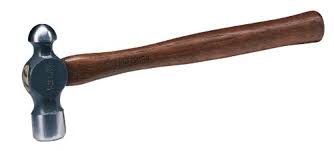
Weapon?
The same logic applies to baseball bats. Obviously, a baseball bat can be used as a brutal weapon. It can also be used to hit baseballs -- an "innocent use". If a baseball player is found with a bat and he is charged with the crime of possessing an illegal club, he should be able to defend himself by arguing that, in this context, his bat is not a "weapon".
The "innocent use" argument is a little more complicated than a lot of people realize, though. In order to raise the defense at trial, the judge must first find that the object in question has some innocent use. Think of the ball peen hammer and the baseball bat -- both of these items are commonly used for innocent purposes. If the judge agrees that the item may possibly be used for some lawful activity, then the defendant may argue that his hammer is just a tool, or his bat is just a piece of sporting equipment.
But that's not the end of the story. Just because your object has some innocent use doesn't mean that it's 100% legal to possess it at all times. If the defendant raises the "innocent use" argument, then the prosecutor must prove beyond a reasonable doubt that the defendant intended to use the object as a weapon. They may build their case with circumstantial evidence by considering the totality of the circumstances -- when, where and how was the defendant found carrying the item? If the baseball player was arrested while leaving a baseball game and wearing a baseball uniform, then the context of the situation looks pretty innocent. If a baseball player is driving around on a Saturday night with a bat behind the seat of his car, it looks less innocent. If the jury believes that the baseball player intended to use his bat as a weapon, he can still be convicted.
Now, this is the nuance I wanted to explain regarding the "innocent use" defense: if the item is clearly a weapon (brass knuckles, a cane sword, a baseball bat with a nail through it, etc.), the judge will not allow a defendant to argue "innocent use". In that case, the prosecutor does NOT need to prove that the defendant actually intended to use the item as a weapon. Intent is irrelevant. When the item is clearly a weapon, then the DA only needs to prove that the defendant knew that it was capable of use as a weapon.
There is a common misconception that gets a lot of people into trouble here. Many people falsely believe that they have a defense to weapons charges if they simply call some illegal weapon a "paperweight" or a "sculpture". A quick search on Amazon will turn up page after page of brass knuckles mislabeled as "novelty items", "costume jewelry" or "for entertainment purposes only". In California, those are not valid defenses. If an object obviously looks like a set of brass knuckles, the judge will not allow the defendant to argue that they were actually something "innocent". And remember, the DA doesn't even need to prove that the defendant intended to use his brass knuckles as weapons, only that the defendant knew that the item was capable of use as a weapon.
There are many possible defenses to weapons charges. If you or a loved one has questions about possessing weapons in California, call us for a free attorney consultation. (714) 449-3335. Ask for John.
Thanks for reading.
Fullerton Weapons Lawyer
Tuesday, March 12, 2019
Arrested in Catalina -- What to Expect
If you found this blog, you're probably one of the hundreds of tourists every year who "have too much fun" while visiting Catalina Island. Hopefully, I can answer some of your questions and give you a better idea of what to expect.
The most commonly-charged offenses on the island include drunk in public, DUI, domestic violence, possession of drugs, assault / battery and fishing violations.
Alcohol-Related Violations
Alcohol-related offenses are treated especially harshly in Avalon. Local police and prosecutors have really made a concerted effort to maintain their "family friendly" reputation, and they've decided that this includes bringing down the hammer on alcohol offenders.
In most California courts, an arrest for being "drunk in public" means a night in jail and a stern warning. In Catalina, though, you're looking at probation, CalTrans labor or some other community service, fines, mandatory alcohol counseling or AA meetings, and whatever onerous terms they can think to impose.
And remember, golf carts are considered "vehicles" under California law. If you drink alcohol or consume drugs before operating an electric cart, you can be arrested for DUI. These types of cases are common on the island.
Fishing Violations
Fishing laws are also a minefield for visitors. Catalina Island is surrounded by a checkerboard of "marine life protected areas". These sanctuaries are not marked and wardens do not issue warnings. If you drift across the imaginary line into one of the protected areas, agents from the Dept of Fish & Wildlife will issue citations. They will board your boat and search your cooler for contraband species and undersized fish. You will be criminally prosecuted for every ticky tacky offense that they uncover, regardless of whether or not you knew that you were breaking the rules.
Possession of unidentifiable fish fillets are a big violation that snares a lot well-meaning anglers. If you clean your fish at sea, remember to leave a 1" square of skin attached so that wardens can identify the species.
Possession of abalone can also be a major headache for divers around Catalina. The minimum fine for possession of a single abalone is $10,000. Once all the mandatory fees and court costs are included, the minimum fine jumps to over $60,000 for a first offense. That's the MINIMUM. Luckily, we have some tricks for negotiating these cases down to less than the minimum in most cases.
Logistics
The tiny courthouse on Catalina Island is open every other Friday, weather permitting. Most of the week, the building is dark and empty. They do not store any files on site. If you appear in court on a date when they were not expecting you, they will not be able to help you.
To schedule a court appearance, you (or your attorney) must appear at the courthouse in Long Beach and coordinate with the clerks and prosecutors there to add your case onto the Catalina calendar for a date that is convenient for all parties. Failure to follow all the appropriate steps will result in a wasted trip.
To make matters even more frustrating, cases on Catalina are often delayed or filed sometime after the date listed on your citation. When that happens, you might spend the time and money to travel all the way back to Catalina, only to find out that your case has been rescheduled for next month. Your case will not simply be dismissed.
If you've been cited or arrested while visiting Catalina Island, a private attorney (such as myself) can attend your court hearings without you being personally present in most cases. There's no sense in traveling all the way back to the island for a series of routine appearances. Let me save you the time, expense and hassle by appearing for you. I can receive copies of police reports, negotiate with the DA and work to secure the best outcome possible for your case.
If you or a loved one was cited or arrested on Catalina Island, call us for a free attorney consultation. (714) 449-3335. Ask for John.
Thanks for reading.
Catalina Island Lawyer
The most commonly-charged offenses on the island include drunk in public, DUI, domestic violence, possession of drugs, assault / battery and fishing violations.
Alcohol-Related Violations
Alcohol-related offenses are treated especially harshly in Avalon. Local police and prosecutors have really made a concerted effort to maintain their "family friendly" reputation, and they've decided that this includes bringing down the hammer on alcohol offenders.
In most California courts, an arrest for being "drunk in public" means a night in jail and a stern warning. In Catalina, though, you're looking at probation, CalTrans labor or some other community service, fines, mandatory alcohol counseling or AA meetings, and whatever onerous terms they can think to impose.
And remember, golf carts are considered "vehicles" under California law. If you drink alcohol or consume drugs before operating an electric cart, you can be arrested for DUI. These types of cases are common on the island.
Fishing Violations
Fishing laws are also a minefield for visitors. Catalina Island is surrounded by a checkerboard of "marine life protected areas". These sanctuaries are not marked and wardens do not issue warnings. If you drift across the imaginary line into one of the protected areas, agents from the Dept of Fish & Wildlife will issue citations. They will board your boat and search your cooler for contraband species and undersized fish. You will be criminally prosecuted for every ticky tacky offense that they uncover, regardless of whether or not you knew that you were breaking the rules.
Possession of unidentifiable fish fillets are a big violation that snares a lot well-meaning anglers. If you clean your fish at sea, remember to leave a 1" square of skin attached so that wardens can identify the species.
Possession of abalone can also be a major headache for divers around Catalina. The minimum fine for possession of a single abalone is $10,000. Once all the mandatory fees and court costs are included, the minimum fine jumps to over $60,000 for a first offense. That's the MINIMUM. Luckily, we have some tricks for negotiating these cases down to less than the minimum in most cases.
Logistics
The tiny courthouse on Catalina Island is open every other Friday, weather permitting. Most of the week, the building is dark and empty. They do not store any files on site. If you appear in court on a date when they were not expecting you, they will not be able to help you.
To schedule a court appearance, you (or your attorney) must appear at the courthouse in Long Beach and coordinate with the clerks and prosecutors there to add your case onto the Catalina calendar for a date that is convenient for all parties. Failure to follow all the appropriate steps will result in a wasted trip.
To make matters even more frustrating, cases on Catalina are often delayed or filed sometime after the date listed on your citation. When that happens, you might spend the time and money to travel all the way back to Catalina, only to find out that your case has been rescheduled for next month. Your case will not simply be dismissed.
If you've been cited or arrested while visiting Catalina Island, a private attorney (such as myself) can attend your court hearings without you being personally present in most cases. There's no sense in traveling all the way back to the island for a series of routine appearances. Let me save you the time, expense and hassle by appearing for you. I can receive copies of police reports, negotiate with the DA and work to secure the best outcome possible for your case.
If you or a loved one was cited or arrested on Catalina Island, call us for a free attorney consultation. (714) 449-3335. Ask for John.
Thanks for reading.
Catalina Island Lawyer
Thursday, February 21, 2019
Are Cannons Legal in California?
Have you ever thought about building a cannon in your garage? Me too. Never mind why.
And that got me thinking about the laws in California. Intuition says that building a cannon can't be legal, but I wasn't sure which specific law(s) a homemade cannon would violate. Turns out, building a cannon in California potentially violates several laws. There is a narrow path through this legal minefield, though. If you follow a few key rules, you might not get arrested. If you do get arrested, you might have a valid defense. Maybe.
The first law you need be aware of is PC 18710. That section specifically addresses "destructive devices". The definition of a "destructive device" in California includes any cannon that shoots fixed ammunition. It also prohibits explosive or incendiary ammunition. Howitzers, mortars and modern artillery are illegal, but this definition does not seem to include traditional "cannons" loaded with black powder, as long as they do not fire prefabricated ammo (casing, primer and projectile in one "shell").
If your cannon uses black powder rather than "fixed ammunition", then it is not a "destructive device". You're not out of the woods, though. If your device fires any projectile (a golf ball, a potato, a can of soup, etc.), it may fall within the legal definition of a "zip gun". A zip gun is defined in PC 17360 as any device that was not produced by a licensed firearms dealer and which expels a projectile by the force of an explosion. Possession of a zip gun is completely prohibited and may be punishable by up to 3 years in prison.
So that leaves 2 options for Californians who want to build a cannon, but who also want to stay on the happy side of the law:
The first law you need be aware of is PC 18710. That section specifically addresses "destructive devices". The definition of a "destructive device" in California includes any cannon that shoots fixed ammunition. It also prohibits explosive or incendiary ammunition. Howitzers, mortars and modern artillery are illegal, but this definition does not seem to include traditional "cannons" loaded with black powder, as long as they do not fire prefabricated ammo (casing, primer and projectile in one "shell").
If your cannon uses black powder rather than "fixed ammunition", then it is not a "destructive device". You're not out of the woods, though. If your device fires any projectile (a golf ball, a potato, a can of soup, etc.), it may fall within the legal definition of a "zip gun". A zip gun is defined in PC 17360 as any device that was not produced by a licensed firearms dealer and which expels a projectile by the force of an explosion. Possession of a zip gun is completely prohibited and may be punishable by up to 3 years in prison.
So that leaves 2 options for Californians who want to build a cannon, but who also want to stay on the happy side of the law:
- If your device is powered by the force of an explosion (black powder), then it may NOT actually expel any projectile. A signal cannon that makes a big BOOM may be legal. If it launches golf balls, though, it is an illegal "zip gun"
- If your device is powered by some force other than combustion (compressed air or a spring-loaded propellant), then it may be permissible.
Disclaimer: this is a very abbreviated synopsis of the law in California. Even if your device is technically (or arguably) legal to possess, there are many other laws that prohibit "reckless" or "malicious" use of explosives, use of explosives with intent to intimidate, or any use of explosives that results in death or bodily injury. There are also exceptions for antique cannons built before 1899, but those cases are obviously rare. These laws are complicated and the nuances are not interesting enough to discuss here.
If you or a loved one is accused of possessing a destructive device or a zip gun, or if you just have questions about weapons in California, call us for a free attorney consultation. (714) 449-3335. Ask for John.
Thanks for reading.
Thursday, February 14, 2019
Brass Knuckles in California

Image from DefenseDevices.com
California has notoriously restrictive laws regarding possession of weapons, so it shouldn't be any surprise that brass knuckles are completely prohibited in the Golden State.
That prohibition includes possession, manufacture, importation and sales of any type of "hardened knuckles", whether they're made of metal, wood, composite (plastic) or even paper -- that's right, section 16680 of the California Penal Code specifically bans "any device or instrument made wholly or partially of wood or paper products", if that object meets the other criteria of hardened knuckles.
And the definition of "hardened knuckles" is pretty broad. Basically, it includes any device used for offense or defense of the hand, either to protect the hand from injury when striking, or to increase the injury inflicted upon another. On its face, this seems to include some common self-defense tools that are freely available on Amazon, like these kubaton keychains:

Item described on Amazon as "EIOU Self-Defense Key Chain"
The penalties are no joke, too. If the weapon is made of some material other than metal, then the offense is a misdemeanor punishable by up to 6 months in jail and a fine of $1,000. If the device is made wholly or partially of metal, then the offense can be treated as a felony, with a maximum prison sentence of 3 years.
There are many possible defenses to the charge of possessing an illegal weapon. One common argument is that the item is not a weapon, it's a tool for some other "innocent use". Think of motorcycle gloves with protective metal over the knuckles, or a ring that covers more than one finger. Those items fit the definition of "hardened knuckles", but they're also commonly used for purposes other than as weapons. If the judge determines that the object has some innocent use, then the DA must prove that the defendant actually intended to use the item as a weapon.
This argument is a little trickier than some people understand, though. To successfully raise the "innocent use" defense, your lawyer must first prove that the object HAS some innocent use. If the object is plainly a weapon -- and designed solely for use as a weapon -- then the defense is not available. In that case, the prosecutor only needs to prove that the defendant knew that the object was CAPABLE of use as a weapon. The DA does NOT have to prove that the defendant INTENDED to use the item as a weapon. This is a nuance that trips a lot of people up. There's a common misconception that brass knuckles are legal if you simply call them a "paperweight", or if you claim that they have some other innocent purpose. If the object is obviously a set of brass knuckles, then the judge will not allow you to raise the "innocent use" defense.
The "self-defense" argument is another one that trips up a lot of my clients. To successfully claim that you possessed an illegal weapon in self-defense, you have to prove some very specific things:
- You reasonably believed that you or someone else was in IMMINENT danger of death or of some serious bodily injury. "Imminent" danger means immediate danger, not some future threat of harm, no matter how great or likely the harm is believed to be.
- You reasonably believed that the immediate use of force was necessary to defend against that danger.
- The weapon became available to you without planning or preparation on your part. You didn't plant the weapon there in case you needed it later.
- You possessed the weapon temporarily, and not for any period of time longer than was necessary for self-defense.
- No other means of avoiding the danger was available, AND
- Your use of the weapon was reasonable under the circumstances.
It's also not a defense to argue that you purchased the item on Amazon, therefore it must be legal. Amazon is full of items that are illegal to possess in California. The seller might be outside of the state and beyond the reach of California law, or they might simply be a low enforcement priority. Either way, you may be arrested for possessing an item that you purchased openly on a reputable site like Amazon or Ebay.
The law regarding "hardened knuckles" is especially frustrating because it is enforced so unevenly. A police officer might spot your kubaton keychain (pictured above) and not say anything because it's not worth his time, or because he personally supports a woman's right to defend herself. You might carry the item aboard an airplane 100 times without any issue. But one day, a security screener at a public event might spot the object, recognize it as a "weapon", summon police and have you cited or arrested. It's not right and it's not fair, but it is common.
If you or a loved one has questions about "hardened knuckles" or any other weapons in California, call us for a free attorney consultation. (714) 449-3335. Ask for John.
Thanks for reading.
Fullerton Weapons Lawyer
Subscribe to:
Posts (Atom)